New beta engine at Midjourney

–v 4, quite impressive!

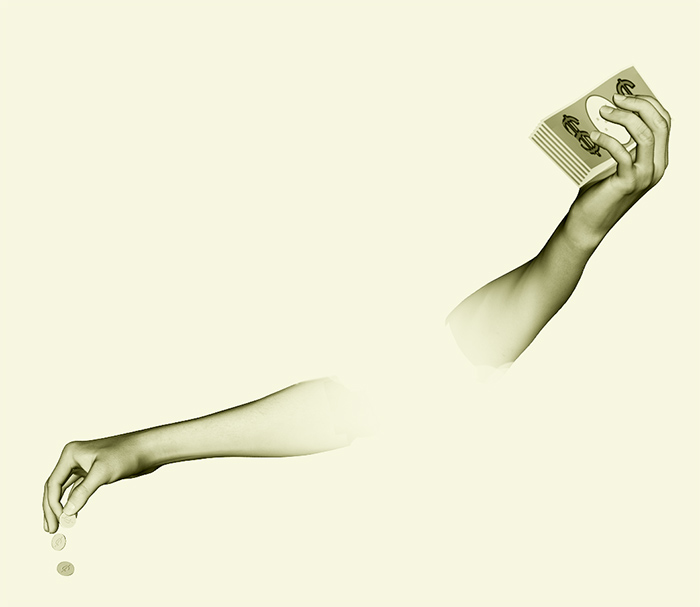
The best approximation to the usual mess at my husband’s team lab 😀 😀

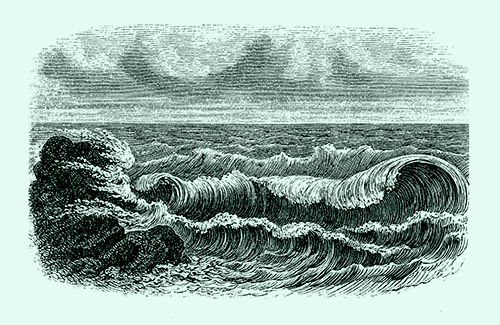
Both images are generated by Midjourney only through text and parameters.
The outcome is surprisingly quite familiar to me: it feels like to be there.

Sorry folks, working with AI is immensely creative and a big source of fun.

De profundis

Paddle steamer in the storm by copyright luisa fumi.

It takes so little to kill the last glimmer of hope… I complained to Alamy about their mass-few-¢-sale of this month, and in reply I got this :

Hi Luisa,
Thanks for your email. I can see that these sales are through our distribution scheme. Which you are opted in for.
Our Distribution scheme is optional and under the section of your account titled “Additional Revenue Option”. As the title suggests it’s an opportunity to earn additional revenue through territories that Alamy doesn’t quite reach with direct sales. Every year our Distribution scheme returns a sizable 15% of our total revenue and so we’d recommend being part of it.
You can only opt out or remove countries in April of every year; this is so we can give our distributors a consistent collection.

Kind regards,
Chantelle

(note: I opted out from their ‘Novel use’ option last April 1st)

Let’s brush off the tiny coat of perfunctory politeness and have a closer look at the gist:

  • So I’m “opted in for”: did I opt in or was I opted in? I don’t remember having checked a box “feel free to sell my images for a few pennies and give me a minute fraction of that”.
  • If their Distribution scheme returns “a sizable 15% of their total revenue”, how many millions of images should they sell on the ‘miserable’ market to make 2¢ for the distributor, 2¢ for themselves and 1¢ for me, and still have a decent income?
    The 22 images of mine they undersold this way got them a total of $1.55 and a mightily irritated contributor about to abandon ship. Perhaps the time has come to move the rampant yuppie who had the Great Idea to the cleaning team.
  • So nice that I can opt out of such an economical disaster in April of every year, indeed. It would be even nicer though to know what exactly one has to opt out of in order to prevent one’s images from being given away like confetti.

“Fair play” has many opposites, and nowadays keeping the rules where nobody sees them has become a very popular one.

There is little doubt left, they definitely are shutterstocking. It’s damn sad to see an agency that used to have fair play as their flagship sink this low 🙁

GRASP ALL, LOOSE ALL

scrooge by .

Old proverbs contain plenty of ageless wisdom. If only people noticed this timely…

Unfortunately though the top-level managers of the microstock agencies seem to be too busy to devote their valuable time to such menial thoughts. Rumors have it that sooner or later, while watching complacently the increasing revenues, a brilliant notion pops out between some rosy-cheeked executive’s ears: “Why should we leave so much money in the hands of the morons that hand us their pictures? We have the market, we have zillions of well-selling images, we dictate the rules.

We all know where that leads: it’s the so-called “Shutterstock effect”. Curtail drastically the contributors’ shares, sell lots of images at bargain prices, give to the beggars their two cents, ignore the chorus of moans, anger and insults that raises from the rabble, see your income grow, shake hands with the colleagues, I’m a genius!

And then, after a few months, the backlash: many contributors feel cheated or even insulted and close their accounts, many more delete their best pictures leaving behind just crap a blind man wouldn’t buy, the incoming flow of images drops to a trickle, the buyers notice the drop in quality and go buy elsewhere, the income curve falls miserably (dammit, maybe with some Viagra…).
And eventually the friendly suggestion “you better start looking for a new job”. But then it’s too late, the damage is done.

Sad as it is, now it appears to be Alamy’s turn. In the last days, without warning or asking for an OK, they surprised the contributors world by selling off a large number of pictures for a few cents, and those who demanded an explanation whatsoever bumped their heads against a pretty long local holiday – no one there to reply, what a coincidence!
One could hope that it’s just a misunderstanding of sorts, perhaps a glitch in the software or a silly human error, but the symptoms are all too clear, and the suspicion that Alamy is shutterstocking is overwhelming.

That’s quite a shock indeed: not long ago they still had a spotless reputation as an agency that cared for the contributor’s satisfactions, paid reasonably fair shares, and provided good help when needed. More than a little demanding perhaps, if you think of the ordeal of keywording it adequately, but you cannot expect such a high-level agency to accept just any picture: they sell excellent quality and are entitled to demanding it.
They are my agency, we do a good job together… good old days? 🙁

Where will all this end? Hard to say that without a top-grade crystal ball and some powerful psi powers. However, judging by the microstock market trend in the last couple of years, a reasonable modicum of pessimism would suggest that most of the major microstock agencies will slowly (or even not so slowly) collapse under the weight of their own greed.

The scenario we could expect in a near future might show us two or three large surviving microstock agencies selling mediocre images very cheap by the ton on behalf of countless grumbling but resigned private contributors, a few ad-supported artistic websites selling very little, the usual lot of websites offering as “windows backgrounds” good images for free (but for personal use only).
And, with a bit of luck, a constellation of sites owned, managed and constantly fed by skilled photographers and graphic artists offering directly to the buyer very high quality images at a fair price, no bloodsucker share included.

If you want the best apples at a decent price, go knock directly at the farmer’s door…:-D

How to sell digital goods

featured by .

Why did I migrate from Easy Digital Downloads to WooCommerce ?

I ‘m a webdesigner in love with digitalart. I’m still selling in a comfortable way my images (photos, illustrations, vintage stuff, 3D renderings) at micro-stock and stock agencies.
But my goal is to sell also by myself. As I can buildup websites, I launched AntikStock to sell a niche of mine: my illustrations restored and elaborated from the huge antique book collection of my property.

At a first glance Easy Digital Downloads (EDD) would really look the easy way to sell downloadable goods. But a rather disturbing (arithmetical!) issue (*) popping up changed my point of view and induced me to look seriously for alternatives and compare performances.

While comparing I found out that WooCommerce offers not only a quite solid E-commerce platform for virtual downloadable goods, but also much more interesting features free of charge.

A few examples: :

  • to duplicate a product to sell with WooCommerce is free, on EDD you have to pay 29usd/year only for this simple feature!
  • to comply with the EU VAT rules is free of charge, no way can EDD compete for free
  • cross-sells and upsells are included, no need to pay for the corresponding EDD options anymore.

I could go on further, I would just add that I completed seamlessy my migration owning an elegant new shop with many more features totally free of charge and – the cherry on top – with a beautiful free image zoom.

(*) As you may know, selling digitally downloadable goods in EU imposes a set of pretty complicated rules made by bureaucrats for bureaucrats, but we can cope with them. EDD behaves okay at checkout time unless you introduce a discount. If you do that a sum of round-up errors appears in the VAT calculation; as quite surprisingly the net amount in this case is not shown, the error goes easily unnoticed – until a diligent official remarks such a few cents mismatch and then things are likely to turn interesting. Of course I reported it, but EDD didn’t seem to take the matter seriously.

Good morning AntikStock!

champagne-600 by .

After a brief running in of vintage-nostalgia.com as my experiment was more positive than expected I decided it would be worth taking a step further, treasuring the previous experience. I made a few improvements:
– a more professional name
– a more reliable E-commerce platform
– bigger sample images (still watermarked)
– much more accurate tagging

Then I buried good old vintage-nostalgia in the garden and launched antikstock.com.

I’m pretty confident that, working on a profitable niche of the image-stock market, a professional website of my own shall be the best way to sell exclusive images decently. It is not time yet to say goodbye also to the best stock agencies, but if the trend stays worrisome the lifeboat is ready.

In this shipwreck I’ll have one advantage and one big flaw: I’m passionate about my work of restoring, elaborating, painting, making collages of antique illustrations from my huge ancient book library, which is growing almost uncontrollably.

On the other hand I’m aware that a good promotion on the social is important, and I have little time for that. We shall see…

Microstock: strategic changes

DCIM100MEDIADJI_0233.JPG by COPYRIGHT LUISA FUMI.

Shutterstock never was my main microstock source of income, but they gave a decisive push to this bizarre new situation where stock images sold for free or nearly (a few cents) cover the best part of the market.
In this new age microstock is no more a gratifying source of revenue. What to do?

Alright, set aside the dreams, forget earning more, let’s just contain the collapse.

A quick analysis of my situation showed that the my ‘best’ agencies were – in that order – Adobe, Alamy, Istock and Shutterstock. Other minor agencies (Dreamstime, Pond5 etc.) were almost negligible as they provided just very occasional income.

In the light of that I changed my strategy, which proved to be a fortunate move: in some way I thus managed not only to contain the dreary “Shutterstock-effect” but also to stay stable at the previous level.
What did I do, exactly?
Chronologically:

  1. Diversify the offer:
    I didn’t want to compete with myself anymore. My new goal was to offer my best images only to my best vendors to avoid selling them ludicrously cheap.
    I drastically chopped the images with the best selling potential off the small agencies. Not an easy job, there was a lot of them, but it worked out fine.
    Yet I keep uploading regularly a few generic images (food, landscapes, animals, nature…) to Dreamstime and Canstock, my best choice among the smaller ones, as they still pay $ rather than cents.
  2. I clenched my teeth and closed my Istock account (where for a pretty long time I haven’t being uploading anyway), even though they provided a regular pretty good income. A matter of dignity, actually: most of the images there were given away even cheaper than at Shutterstock (!), though not many of us screamed about that…
  3. I left only a few hundreds really ugly images on my Shutterstock account, deleting one by one all the others with evil satisfaction. The best of the uglies is this, utterly topical at lockdown times 😀
    Three rolls of soft white toilet paper on a wicker basket by luisa fumi.
    Three rolls of soft white toilet paper on a wicker basket
    Nevertheless every now and then something gets sold even there: since last summer I made almost 3 dollars! (I’m considering buying a Rolls… 😀 )

As a result quite unsurprisingly the minor agencies are selling much less for me but my sales at Alamy and Adobe jumped nicely up thus compensating the burial of my Istock account and the loss of my huge (LOL) Shutterstock income.

In this way I’m not earning much more than before, but changing my tactics produced a very nice side effect: I feel now really better 🙂

However this is just an intermediate step: I’m still looking for further opportunities that comply better with the new rules of the game. They are there, they always are, it’s just a matter of finding them.
And let see what makes Adobe now, the news are a bit uncomfortable … the game is changing again, but okay I can play 🙂

Microstock: considerazioni e strategie

DCIM100MEDIADJI_0233.JPG by COPYRIGHT LUISA FUMI.

Shutterstock rappresentava una parte non dominante dei miei proventi stock.

E’ stato però il sassolino che ha fatto franare la montagna: il mercato micro ne è stato rivoluzionato: ora con molta offerta gratuita o semi gratuita (come quella attuale di Shutterstock) è più difficile pensare al micro come una fonte di guadagno.
Che fare?
Pur essendo per me un part-time job per passione, sono corsa ai ripari con lo scopo a questo punto non di aumentare i miei guadagni ma di non perderli.
E ci sono riuscita.
Sono partita da un’analisi della mia situazione:
il mio income veniva essenzialmente nell’ordine da Adobe, Alamy, Istock e Shutterstock.

Le altre entità (Dreamstime ecc, ) sono state purtroppo sempre trascurabili in questo gioco, non un importo mensile regolare.

Le cose fatte in successione:

  1. non competere con me stessa: ho diversificato l’offerta, falciato sistematicamente le piccole agenzie delle immagini con maggiore potenziale di vendita dove attualmente continuo ogni tanto a caricare immagini “generiche” magari utili ma non particolarmente “belle” (food, paesaggi, animali, natura ecc.), in primis su Dreamstime e Canstock da dove arriva più qualche dollaro che cents per singole vendite.
  2. Ho preso il coraggio di chiudere il mio account su Istock. Non ci caricavo immagini da tempo anche se avevo tuttora una buona entrata regolare. Guardando come erano distribuiti questi dollari, la maggior parte delle immagini andavano via a pochi centesimi, meno che con il Shutterstock odierno, ma nessuno (o quasi) l’ha gridato…
  3. Ho lasciato un paio di centinaio di immagini veramente brutte su Shutterstock, cancellando a una a una le altre. La più bella rimasta è una montagnola di carta igienica scattata per il lockdown.
    Three rolls of soft white toilet paper on a wicker basket by luisa fumi.
    Three rolls of soft white toilet paper on a wicker basket
    Non ho chiuso l’account poichè ero curiosa di vedere come sarebbe andata a finire. Ogni tanto qualcuno mi compra per 10 cents una di queste immagini (sono arrivata a quasi a 3 dollari!) e devo dire che non c’è limite alla bruttezza.

Il risultato è che sono diminuite le vendite piccole ulteriormente ma sono aumentate significativamente le entrate da Alamy e Adobe. L’income mensile viene praticamente solo da queste due agenzie e si è mantenuto stabile sui valori ante Shutterstock compensando non solo le agenzie minori, ma anche la chiusura del mio account Istock .

Non ho guadagnato ma non ho perso, ho spostato. E mi ha fatto sentire molto meglio 😀
Poi mi sono guardata intorno, cercando altre opportunità, dopotutto non si sa cosa di preciso farà Adobe dopo le ultime news. I giochi stanno cambiando ancora, ma non mi fa più paura, posso cambiare le carte in tavola anch’io.

Di questo ve ne parlo in un prossimo post.

Using the DJI Pocket 2 in an unconventional way

DCIM100MEDIADJI_0008.JPG by .

This is me in an ectoplasm version, having plenty of ghostly fun with my new camera.
My husband and I gave ourselves a Christmas gift in advance: the new DJI Pocket 2: a tiny pound of pocket-size camera with a great sharp sensor and a gimbal head allowing absolutely smooth 4K video clips at a very affordable price.

But I’m not going to describe the characteristics of this great new gadget here, you can find much more on YouTube and on specialized reviews. As I am not particularly fond of movies (I like still pics much more) I wondered if this pocket-size camera could replace in some way my good old one.
No sooner said than done, I began taking shoots outdoors and indoors with both and then comparing the outcomes.

My first images were accepted at Adobe, Alamy and Arcangel without arching a brow.

Voilà some of them:

Not bad at all 🙂

My first images at Arcangel!

AA11665980-500 by luisa fumi.

Since the microstock ship has begun to sink, thanks the Shutterstock coup de grâce, I gave some thoughts about escaping the frustration of the current situation.
It saddened me to see the Stock Coalition profile photos on FB : so many stunning images from many talented photographers on one side, and the fight for a few cents or (occasionally) a few dollars on the other.
This is not right.
These images tell a story: nobody should ever have to sell them this way.

Thanks to the suggestion of Alex Rotenberg’s Brutally Honest Guide to Microstock I applied to Arcangel, a stock agency that licenses images for book and disk covers. I had applied in the past in a lazy way and was discarded. Now, trying really to understand the mood of their images (and having fun doing it), I sent 20 resized pictures on one Sunday night and on the Monday morning after was instantly accepted!

Here a first batch of images:

I don’t know if this new adventure will sale well (if at all) but:
– in few days I learned about image processing more than in a decade
– I discovered the difference that ought to be between microstock and stock (the subject of my next post)
– I DON’T have to do the keywording job 😀 (I hate it even if is of paramount importance)
– I keep having fun discovering in my hard disks images not yet published and processing them in a quite different and emotional way

One promising alternative to the self-hosted site: Picfair

luisa-photogr3-1000 by .

I always hear the same refrain: yes, they are fair indeed, pity though that they don’t sell much…
Actually so far my experience at Picfair had been… fair: for a few years I’ve been putting every now and then some images there, having three or four sales promptly paid in the meantime.

But times seem to be changing, and I decided that I need a personal photo website. I would know pretty well how to set up one myself, but for a small yearly fee Picfair offers me the possibility to have it under my own name, and as a very nice bonus also to sell my pictures as prints/posters/framed. So why not to give it a try?

So be it: luisafumi-photography.com
The presentation of the images is very good, and I can (beside having an URL of my own by them):
– sell prints,
– make albums and feature one on the first page,
– have a local search engine,
– create a splash page with a picture I love
– add external links to the menu (to my blog here, to my other website vintage-nostalgia.com, etc.)
– have a personal watermark. I retained the Pifair standard one, very well thought and designed, also because I am happy to be there in excellent company, as I find the overall Picfair image quality astonishingly high.

Time will tell if such a decision will be fruitful – now it is to early to make a reliable forecast about the destiny of the photo market at all.

Just few days after my new Picfair installation I was rewarded with a pleasant surprise: my first print sale, my splash image! A good omen and a nice startup.

SPLASH-PICFAIR-600 by luisa fumi.