Pruning the photostock agencies

Till death do you part…

Alas no, most of the times it doesn’t work like that: while between two people it takes plenty of patience, tolerance and forgiveness on both sides for a marriage to work fine until its natural end, between a person and a microstock agency things seem to be much harder – maybe because usually only one of the partners has a heart and a soul.
Be as it may, oftentimes the initial enthusiasm sooner or later drifts slowly into disillusion first, then into annoyance, and eventually into divorce.
Having gone through that unpleasant experience several times (with the microstocks, I mean – I still get along pretty well with my nasty old husband 🙂 ) I’ve learnt the hard way that even divorcing a microstock has a price, fair or outrageous depending on the agency. Let me share with you a few of those experiences, so that you may think twice before putting that confounded virtual ring on your finger.

First things first: why?

Because wasting time and toil for a few cents was never my favorite hobby, so I resolved to get rid of the agencies that in the last years had sold just a negligible number of my works.
Eventually I counted the dead: there were eight of them!

As a result I’m listing below the “won’t-miss-them” by star rating according to the smoothness of the parting.

Pond5:
The best. Smooth and gentlemanly parting.
Someone there asked me kindly why, I replied that all in all by them I wasn’t a best seller and parting was the best course of action. Soon after the same person sent me a kind email to confirm the account closure, a PayPal transfer notice to settle up and the promise that should I change my mind I’d be welcome back.
Worth a kiss!

Arcangel:
No hard feelings, with a frank and honest email exchange.
At first I had sold through them a couple of covers but that was it.
They were extremely choosy and I was increasingly skeptical because as a matter of principle they refused any job touched even remotely by AI, which at times like this doesn’t look very convincing to me.
But that’s not my problem, I wish them good luck.

Zazzle:
Simple and quick divorce, the only problem was to find the right web page, that as usual was well concealed.
I was making a little money by them but in the end personalizing various items using a rather cumbersome software wasn’t worth the time and toil. Too much work for too little.

FineArtAmerica:
Easy quick impersonal parting, no hard feelings (actually no feelings at all).
The last year I haven’t sold a hairpin by them, and no news from them.

Red Bubble:
Here too an easy fast impersonal parting, though somewhat sad on my side.
Through them I was selling some more than through other POD’s, I’ve been by them for several years and I was genuinely fond of them. But the day after they cut drastically the royalties I had no choice but leaving.

123RF:
No problem. Nor a word from them.

Dreamstime:
As a reply to my termination request I got an unpleasantly clear text:

“Please take into account that contributors are required to keep at least seventy (70%) percent of their portfolio online with Dreamstime.com for a period of at least six (6) months. You may disable all files older than six months from the date of review at any time. You will be allowed to disable a total of thirty (30%) percent of your total Media submitted within the past six (6) months. Media that was disabled and then enabled again will be counted as new submissions, no matter of their original upload date.”

Great: as punishment for my infidelity the images owned by me, on which I hold copyright, are held hostage for 6 months.
No doubt they are legally entitled to do so pursuant to some clause buried somewhere in the fine print that few contributors are likely to remember years later, but still…
They have been my first microstock agency, I stayed stubbornly with them until my royalties dropped below $100 a year, and even then I was saddened by the idea of leaving them. But as I read their reply my sorrow vanished like snow in the sun. Time flies…

Zoonar:
Same as above: apparently here too I’ve been a bad girl and thus my works are held hostage for 6 months.
I don’t remember for how long I’ve been keeping an account by them, however I found in my archive an email from Zoonar dated 12.05.2009.
Long story short: so far I haven’t attained their pay-off threshold yet — possibly also because quite a share of the images I submitted got usually rejected (and keep selling nicely on Adobe and elsewhere).
Such a pity that their communications concerning the cancellation of my account and the inherent restrictive conditions were not sent me per email as one would expect: if memory serves they only appeared fleetingly on my dashboard, and when I got back there to make a copy they weren’t available anymore. I also seem to remember a message about something concerning my PayPal account (also mysteriously vanished from my dashboard) that might prevent them from paying me off… a real financial catastrophe, but I think I’ll survive even without the €6.71 they still owe me 😀


Do I hear an “and what about Shutterstock?
Well, embarrassing as it is, I still retain a tokenish account by them. Since they cut their royalties to a few cents/image all I left by them was the picture of a (never sold) toilet paper roll, but so far I never deleted my account there.
Why? Please don’t ask 🙂

Bear in mind

Unless you have stolen them, your images belong to you: you shot them, you processed them, you keyworded them, you uploaded them, you own the copyright.

Some agencies will be fair and acknowledge that, some will expect to hold them hostage for months – just like an obnoxious partner would do with the children, although in this case they didn’t even contribute to their birth.

An excellent reason to read carefully the fine print before signing in.
Just saying…

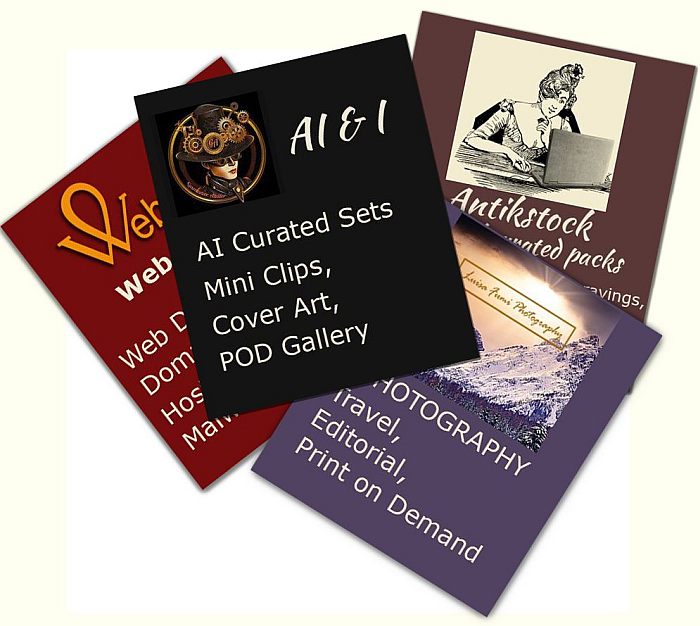
Just to recap my Websites

Online there are several websites of mine, each one with a specific purpose and leading theme, thus it’s pretty easy to get lost among them.
As my uncontrolled interests range farther than that, I think it’s a good idea to contrive a simple summary page like this:

Web-ankh [DE-IT]: is the site of my web services agency.

There are quite a lot of web services agencies out there, but I think I can offer also something more: in particular
– a thorough protection suite against web malware, inclusive of firewall, updating and frequent backups for just in case.
– plenty of experience about online shops to sell digital goods – comes in handy more often than you think.

Gameover’s Atelier AI & I: this site ( also reachable as Luisa Fumi Digital Art) reflects my unrestrained curiosity about AI-generated art.

I tested so many dedicated AI systems and I think that for the time being Midjourney is the best: not easy to prompt, sometimes sort of “moody” (laugh if you wish), but really unique as results.
Here I present the outcomes of my fights with Midjourney (only the ones I won 🙂 upsized and post-processed in a traditional way.
I’m enthralled by this experiment and keep having a lot of fun with them.

All the images are “ethical: they do not reference copyrighted characters, living artists, brands, or recognizable individuals.

To flesh out the site there are also a “Cover Art” section, a “mini-clips” page and a Print On Demand Gallery.

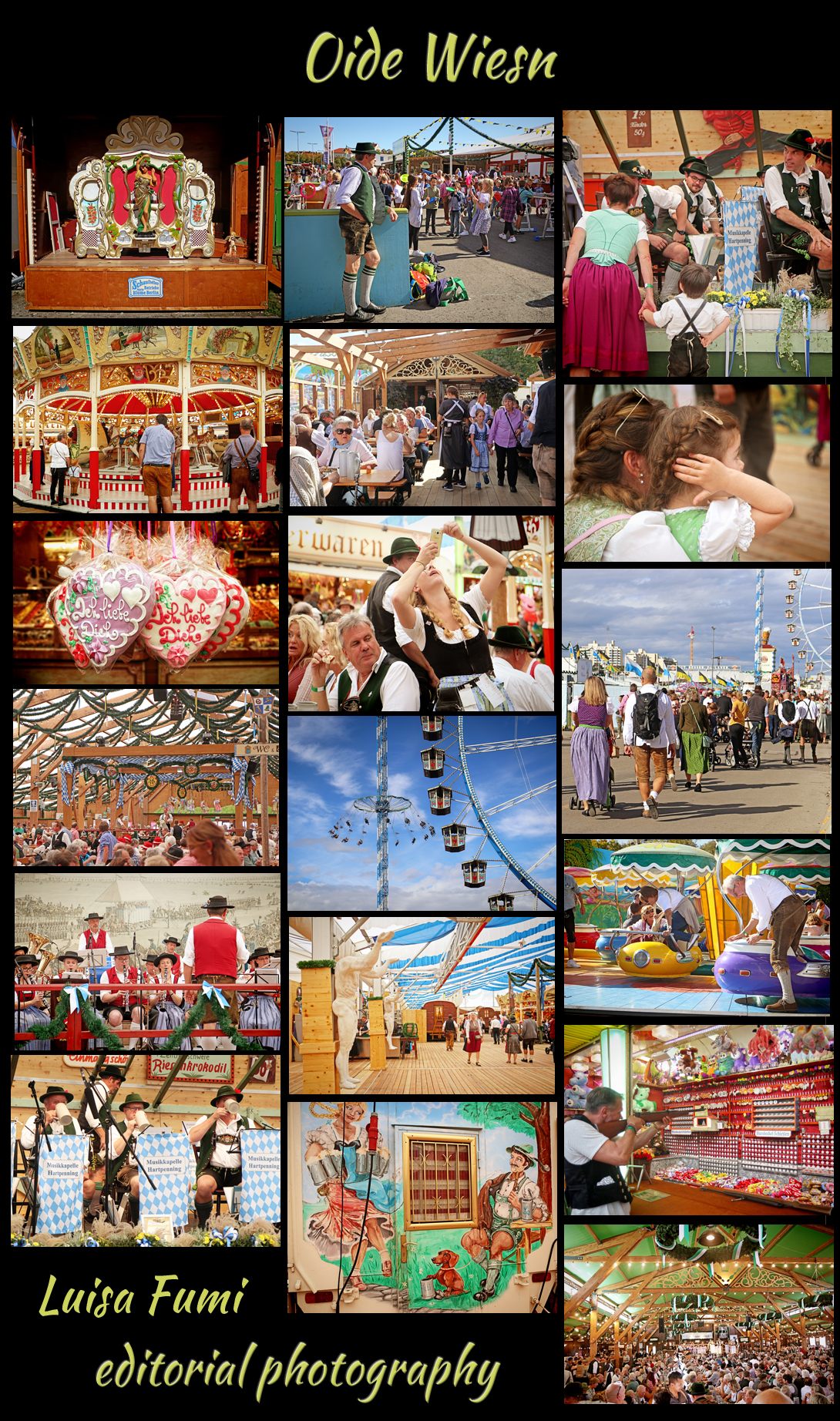
Professional photography: a site to show off my skills and my long extensive experience as photographer.

Mostly editorial and travel images from all around the world – untouched by AI hands 😊.
Hosted by Picfair, the site offers also a Print-on-demand service.

I’m thinking of expanding this site to more artistic stuff like exclusive cover art (a different taste from my corresponding AI covers). We’ll see.

Antikstock: last but definitely not least.
A rich collection of curated images (mostly engravings) from the past, all scanned from ancient books manically collected over a lifetime, all painstakingly restored from the damages of the centuries, all free from copyright issues (due to their venerable age).

I’m interested of images that speak to one another, forming complete visual worlds rather than disconnected fragments. Single images from the past, isolated from their context, often lose part of their meaning.

Working with historical imagery often means long research times, inconsistent quality, and stylistic mismatches.
Curated sets solve this by offering visual consistency, contextual coherence, and immediate usability:
press history, old magazine advertising, botanical art, medieval marine monsters, antique Egypt history and art… does it ring a bell?

And yes, I almost forgot it… there’s also my blog here.
I have a lot of fun writing it, hope you’ll enjoy reading it and commenting (unless you’re a troll – in which case you’ll be fed to our pirañas 😄).

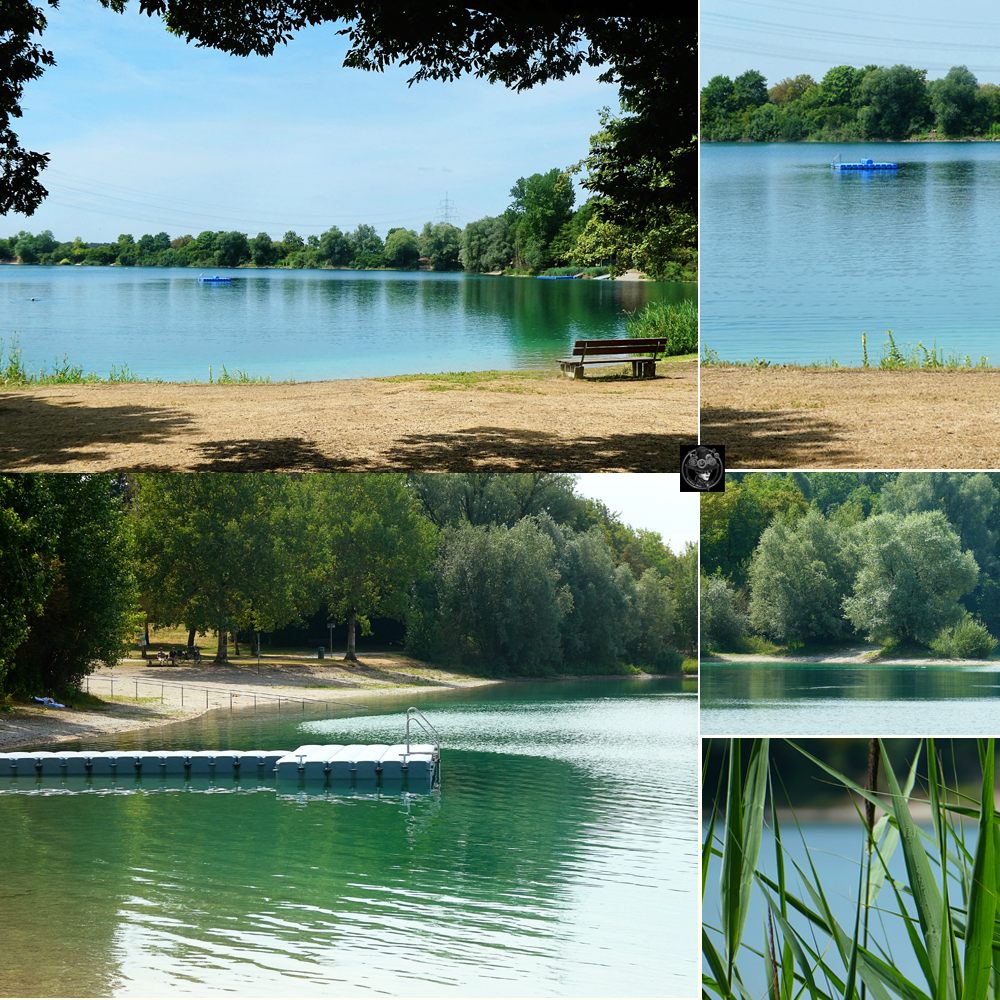
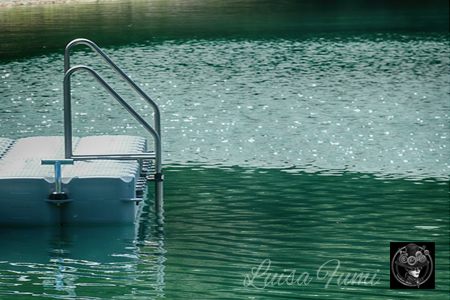
Echinger See, one summer morning…

One morning of this hot weather summer season, looking for a bit of fresh air we made a stop there and it was charming: quiet fresh blue waters, nobody in sight.

Taking out my camera was irresistible. I hope you like the pictures 🙂

Would you fancy a swim?

My websites: from Archive to Curated Collections

Over the years, my websites have gradually grown into very large image archives, bringing together historical reproductions, restored engravings, and AI-generated visual work.
Many visitors have explored them freely, sometimes using individual images as references, illustrations, or inspiration in ways I often discovered only by chance.

Recently, however, I began to feel that this structure no longer reflected the way I actually work.
Single images, isolated from their context, often lose part of their meaning.

What interests me increasingly is not accumulation, but coherence: images that speak to one another, forming complete visual worlds rather than disconnected fragments.

I was also aware that my customers often prefer to buy several images of similar content instead of a single one (botanical illustrations, more photos of a business center together, portraits of 18th century scientists, just to name a few).

For this reason, the sites are gradually being reorganized around curated thematic sets.
Here two of them on Antikstock


This transition also allows the visual material to be presented more clearly and consistently, while preserving the possibility of acquiring individual images when needed.

A smaller selection of standalone images and free resources will remain available, while new curated sets will continue to be added over time.
If you are interested in licensing or acquiring a specific image from a set, feel free to get in touch directly.

Thank you to everyone who has visited, shared, referenced, or quietly followed these archives over the years.

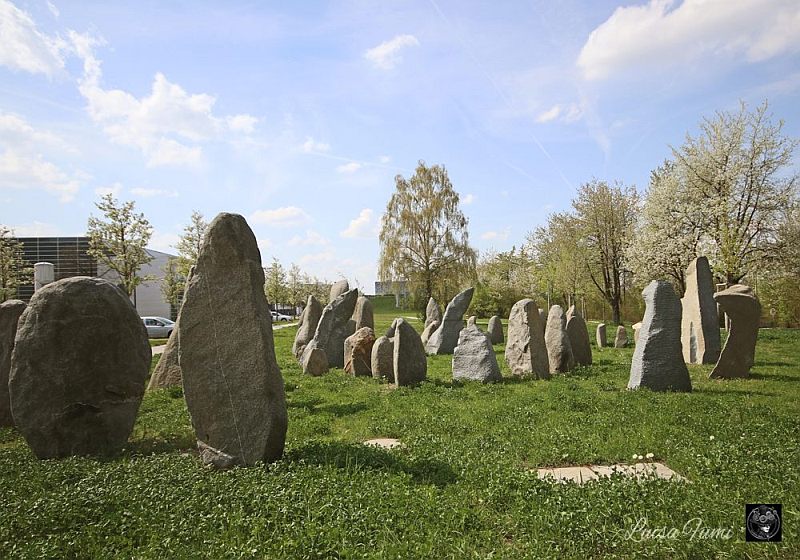
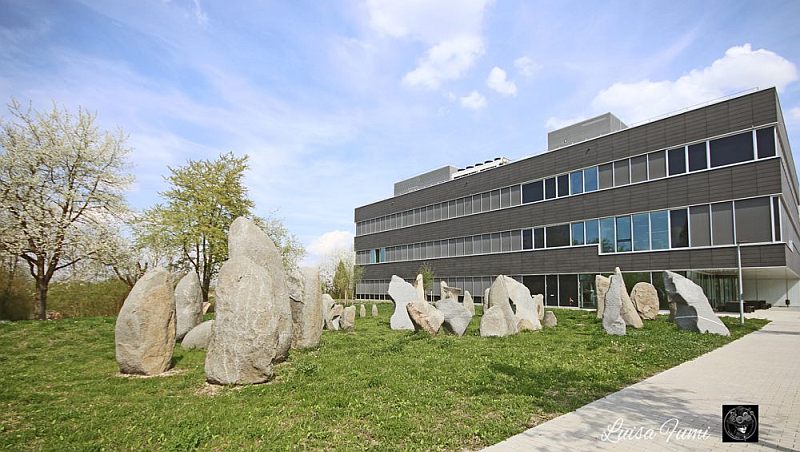
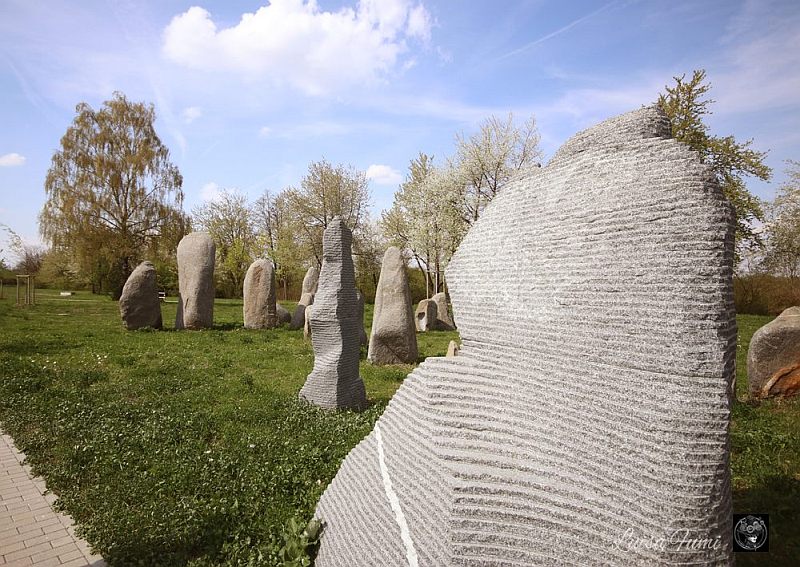
Editorial Photography: Quantumhenge

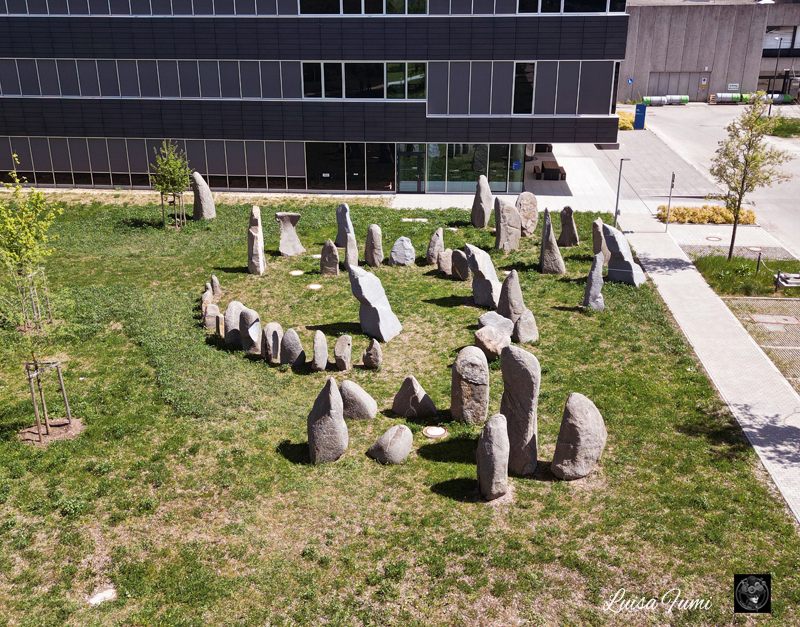
Formation of a quantumhenge” megalith monument of granite, artwork of Judith Neunhäuserer in front of the Center for Quantum Engineering at TUM campus in Garching of the Technical University of Munich.

The art inspiration was an iconic quantum experiment from Crommie M.F., Lutz C.P., Eigler D.M. “Confinement of electrons to quantum corrals on a metal surface“, in: Science. 1993. V. 262.P. 218ff. (painstakingly copied from the board there 🙂 )


Suggestive, indeed, and discovered by chance, driving along the campus.
The first impression was surprise “How! Why nobody told me that we have a megalith Stonehenge here!
Then came the curiosity.

Walking around it, I thought I saw a piece looking like the Rosetta stone inside the circle.


Worth a visit, definitely!

The Café-Library — Open at Night

I’m quietly transforming my websites.
The idea is to offer full sets of selected images built around a focused idea — a set of visuals that share the same atmosphere and narrative thread, designed as a complete package ready for illustrators, designers, publishers, and anyone who needs consistent imagery with a strong personality and immediate usability.

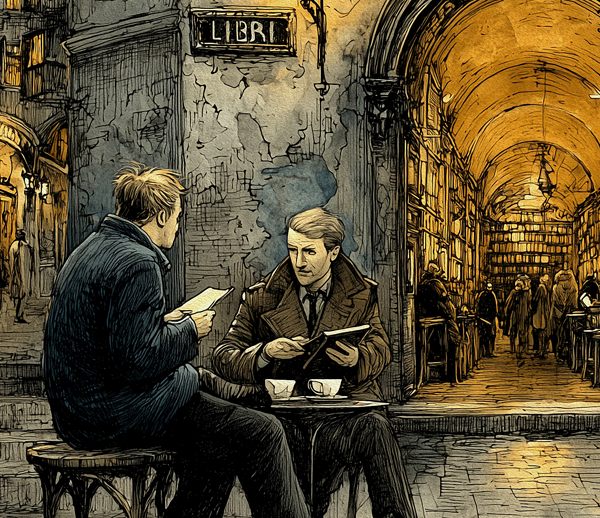
One of my curated sets is The Café-Library open at night
I’ve ever been and still am fascinated by books – don’t know how many thousands I have at home – thus the idea seems fabolous to me:

a bookshop-café open all night with the option to sit quiet and read a book (rented or bought), and at the first morning light, with a warm latte and a book in your hand, to go back to your place and sleep the day.

The atmosphere draws loosely from literary and real references – from Gianrico Carofiglio’s Osteria, to many brillant works of Walter Moers, to the Library Bar in Copenhagen.
Then came my imagination: the quiet pedestrian streets of an Italian downtown, dim light all around, most of it coming from a cheerful open bookshop with tables and seats outside or inside, with people sitting there, reading comfortably and sipping a coffee.
Every so often at the same table sit two people, occasionally they talk together but usually they are as good as alone, each one completely absorbed in their reading.
Sometimes under a vaulted ceiling of one of these coffee-bookshops someone sits at the piano in a corner and plays a soft tune.
Not easy feeding the feeling to Midjourney, but I’m happy with the result of a consistent, common atmosphere.

Et voilà some of the 16 selected images from the set:

In a time of constant distraction, the idea of a place dedicated to open, welcoming, uninterrupted reading looks quietly radical to me 😀

Une petite note for the AI-skeptics:

If you feel like writing a piece of poetry you’ll probably use a word processor, if only because today stylus, nibs and ink aren’t all that easy to find. And no one will dream of claiming that the real poet is the word processor you typed on and not you.
Things change if you use a sophisticated AI as a writing tool, but not by much: there’s still something essential, let’s call it ‘the human touch’, that you must provide yourself lest the outcome sound somewhat dull, insipid – even though there’s always the simpleton who takes the bite and congratulates, but that’s another story 😉

Same goes if you use a sophisticated graphic AI to give body to a dream you found in your mind, that otherwise would take you days or months to draw or paint with your own hands: if you want it to evoke the feelings that inspired you, the human touch must come from you.
Hard – if ever possible – to tell what this mysterious human touch really is: it’s something that you feel, not that you understand. Something related to the rustle of old pages under your fingers, to the smell of an ancient leather binding, to a gentle breeze ruffling your hair, to the taste of an early coffee, to the faint memory of a happy moment lost in the past… and this is as far as I go.
A tool is a tool is a tool.

2025: A WEBHOSTING ODISSEY

Part One: The Past

Once upon a time…

I’ve been dealing with websites since short after the dawning of internet, fascinated by that then-new marvelous technology that allowed anyone endowed with a modicum of computer skills to reach everywhere in the world almost instantly – and for peanuts.
At the very beginning merely static webpages painstakingly assembled in naked HTML, my works quickly evolved into more sophisticated websites made with Dreamweaver and Flash, then inexorably into complex dynamic sites and online shops developed in Perl. Eventually, out of convenience, I landed on widespread WordPress, a comfortable web-development platform that I still keep using today in its classic mode without cumbersome blocks.

The first hosts

Yet a website is nothing but a jumble of bits unless it is placed on a server connected to the internet, and a server is provided and maintained by a host, the indispensable interface between a company and the World Wide Web. As you may easily guess, over those years I’ve seen all sorts: I’ve changed so many hosts that I’ve lost count of them. From some I run away scared, disgusted or fuming after less than an hour, by others I stayed for several years.

There are so many memories… the fondest one is about the CEO of a host whose name is now lost in the fogs of time, who kept an ante-litteram blog, “from my desk…” until he sold the company, that soon thereafter became bleakly impersonal.

An ominous experience…

Then there was another host that here I’ll call MaphYeah (not their real name), by which I lived the most sinister and at the same time most amusing experience of my web-designer career.
One day I found within my WordPress website hosted by MaphYeah the parasitic clandestine site of a Chinese company selling fake branded clothing – for which I would have been legally accountable. At my outraged complaint (I was paying an extra specifically for “security”) they demanded an additional hefty sum to cleanse my share of the server, implying subtly that, should I leave, the issue would follow me.

…but a nice discovery

Of course I flew the coop at once by cloning my website onto a different host and (better safe than sorry) added there as many anti-malware WP plugins as I could find on the web.
One and only one of them identified immediately a backdoor (who might have put it in there?) that I removed easily. Like this I found out what plugins boasted protection without providing any, and which one really worked – a most important discovery that took me a lot of toil and anger.

Since then my partner and I customarily add the “good” anti-malware plugin to the websites we design, as part of a new comprehensive security package of ours (inclusive of regular backups and much more) we offer to our customers.

Most web developers agree to take care also of SEO and diffusion, but nearly all of them neglect the ‘security’ part, which is growing increasingly essential as the web-ruthlessness expands uncontrolled.
No mere words: we thwarted successfully a considerable number of attacks to our customers’ sites (as well as to our own ones) and thus we know all too well what it means to swim among sharks and pirañas.

And what about that infamous host? For all I know “MaphYeah” is still alive and kicking, so beware! Before opening an account by an unknown host ask all relevant questions. If they ignore or evade them, run away as fast as you can.

Part Two: The Present

Almost satisfactory but… 🙁

Until a few weeks ago my host was A2Hosting, once considered to be among the best ones. For several years it really was, and I was quite happy with them: WordPress-optimized servers, satisfactory speed, friendly fast competent efficient customer service.
Nothing is perfect though, and even at their best they had two significant flaws:

– While the contract boasted infinite server memory (quite an ambitious goal, actually), in fact as I exceeded a 50 GB threshold they started bombarding me with emails saying that they were insured up to 50 GB and beyond that there was no backup, thus I’d better reduce the memory use. Not so nice indeed, they should have made it clear at the outset.
– After the first promotional year their annual fee grew really huge. But after all my image-intensive webpages loaded very fast and their service was reliable, not necessarily a given in my experience. So I stayed with them.

A2Hosting beheaded to Hosting

But alas, all good things come to an end: not long ago ‘A2Hosting’ became just ‘Hosting’, the company grew larger and the real troubles promptly began.
I had by them quite a number of interlinked websites, all with excellent internet visibility, and I could count on a considerable constant visitor flow.
Until one day a few weeks ago I noticed that on one of my sites all the pages showed up regularly – but without the images! Sort of annoying when it affects a site designed to sell images, right?
I opened a ticket – no reply, not even the usual boring automatic one. Pretty fishy.
Long story short, after one day they got in touch with me and soon the issue was solved. But as I asked for a technical explanation of what really happened, who tampered with my websites without my permission and why, they turned cagey talking vaguely about an unspecified “setting” and promised it won’t happen again. Not a hint of an apology.

Other people, other mood, other way to treat a customer. Downsizing? Greediness? Too many customers? I don’t know and I don’t care, As a (dearly) paying customer and a professional I expect clear explanations, not fogbanks. And many sad experiences suggested that once such an attitude creeps in, it stays.
Fortunately my annual contract with them would expire in a few weeks, about the time needed to find a better host and safely migrate 6 websites. A stroke of luck indeed: I canceled my contract and started looking for a more decent host.

Not an easy job indeed: they all use to promise the moon and stars, but very few of them deliver. However sometimes a long suffered experience comes in handy, at least by allowing me to read between the lines rather than only on them.

A new hope

So I eventually decided on BoostedHost: plenty of positive feedback, same quality as A2Hosting when they still worked OK, competitive cost even after the first year for the same performances.
And from the outset I’ve been pleasantly surprised by their kindness and availability, their competent advice, their prompt help in optimizing my sites’ cache by them to my full satisfaction.
All in all a great sigh of relief!
Another – if more subjective – positive point is the feeling that the team here is enthusiastic about their job and happy to provide help and solve the possible problems – something you don’t find around every corner.

All in all BoostedHost seem to have all the assets needed to grow into a really big hosting company, thus most likely they will. Will they also be able to retain their enthusiasm, their friendliness and their competence along and after the growth? I really hope so, and wish them so: that would finally put an end to my way too long and troubled odyssey in search of a most decent host 🙂

Part Three: The Future

While talking with other artists and photographers I get the feeling that most of them would be tempted to try and set up a website of their own but hesitate due to the lack of specific know-how.

Will AI provide the solution?

A few days ago I got an email from BoostedHost telling me that by them is now available for free (the magic words!) an AI-based system called ‘Orbit’ that should greatly help in the design of a website. So far I had no time to try it but I’m curious as hell: apparently all you have to do is to explain in plain words what you wish, choose pictures, themes and styles, and… voilà,
a perfectly optimized website without any hassle.
Generally speaking the popular “if it sounds too good to be true, then it probably is” is a very wise guideline, but a number of amazing sessions with ChatGPT and a long successful cooperation with MidJourney convinced me that there are exceptions. So why not give it a go?

With a bit of luck I’ll find the time and report to you about it in detail next time 🙂

If you liked this post I suggest to read How to sell stock images today too.
Venetian Graffiti n.2

My photo of another interesting graffiti on a Venice street wall
La patria sarà quando tutti saremo stranieri
literally:
There’ll be a homeland only when we’re all foreigners.

A paradox that overturns the traditional idea of homeland: not an identity that excludes, but a condition that includes.
Only when no one is “at home” can we all feel at home.
Is it utopia, or simply a definition still ahead of its time?

Venetian Graffiti

My photo of a whimsical graffiti on a Venice street wall
Non c’e più nessun Virgilio a guidarci nell’Inferno
literally translated:
There’s no more Virgil left to guide us through Hell

We’re lost in the dark, and this time there’s no teacher, no poet to show us the way.
Maybe we burned our Virgils, or maybe we just stopped listening.