Hosting vs. Customer – the usual script

You find something’s wrong with your website – alright, sh*t happens, don’t panic. First things first, you check all you can on your side (WordPress, plugins etc.), but everything looks OK.
Oh oh… then there’s one and only one thing to do: call your host’s secret… opps, support service.

And the ordeal begins.

Exception: BoostedHost is one of my host and it seems to be still human 🙂

First step


Instead of the polite competent expert you were expecting, on the other end of the chatline you find an AI (Artificial OK but not necessarily Intelligent) tasked with getting rid of the most inexperienced or naive customers by suggesting that the issue is their own fault (“Was your computer properly plugged-in? Then you probably did this, or this, or that”.

Note: you can skip this step by just opening a ticket and hoping for a fast reply thus saving one PITA.

Second step


Once you manage to clear the hurdle (sometimes just shouting a couple of times “I want to talk to a human!!!” works fine), you’re put in contact with a junior serviceperson full of goodwill who does his/her best to understand your problem within the limits of his/her skimpy competence, to empathize with your sufferance and to praise you for your patience.
Don’t be harsh, he/she isn’t there to solve your issue but rather to pass on your complaint to a senior serviceperson. If you manage to hold your temper throughout those first two steps, you’re worthy of their attention.

Third step


The senior serviceperson sounds somewhat competent and professional (can tell a cache from a cake, and even more), listens to your complaints, suggests a couple of tests you already run as a matter of course, looks a bit annoyed that you thought of them first, then solves the issue by blaming you for doing something you know you didn’t.

Fourth step


With your nerves on edge you pay a visit to ChatGPT and tell it in detail the established facts and your hypotheses – GPT is a gentlebeing and thus listens patiently without interrupting or jumping to conclusions.
From it you get all the understanding you need to placate you and a nice list of 3rd-degree questions to grill the senior serviceperson with (“yes or no, no maybe’s!”).

Fifth step


The senior serviceperson (not necessarily the one you already met), crushed by GPT’s 3rd-degree questions, finally admits that one of them hit the bull’s eye and the problem is actually their fault.
Without a word of apology or regret for their indifference and/or incompetence – the customer’s always wrong, huh?

My crystal ball says…

Dark clouds are gathering on the horizon:

many hosting companies are excited to announce that the AI is on board, ready to ‘help’ you design your websites to your taste, no web knowledge needed – just warm up and serve.

I’m afraid that such a grand entrance will encourage the Big Bosses to regard human competence as even more irrelevant than it is today. Then why squander dear money in expensive junior and senior servicepeople while the AI can take care of the customer support as well?
Let me hope that at least it will be ChatGPT

However at this point I’m wondering if there’s still space enough in my cellar for a small, old-fashioned tower desktop to configure as a server 🙁

2025: A WEBHOSTING ODISSEY

Part One: The Past

Once upon a time…

I’ve been dealing with websites since short after the dawning of internet, fascinated by that then-new marvelous technology that allowed anyone endowed with a modicum of computer skills to reach everywhere in the world almost instantly – and for peanuts.
At the very beginning merely static webpages painstakingly assembled in naked HTML, my works quickly evolved into more sophisticated websites made with Dreamweaver and Flash, then inexorably into complex dynamic sites and online shops developed in Perl. Eventually, out of convenience, I landed on widespread WordPress, a comfortable web-development platform that I still keep using today in its classic mode without cumbersome blocks.

The first hosts

Yet a website is nothing but a jumble of bits unless it is placed on a server connected to the internet, and a server is provided and maintained by a host, the indispensable interface between a company and the World Wide Web. As you may easily guess, over those years I’ve seen all sorts: I’ve changed so many hosts that I’ve lost count of them. From some I run away scared, disgusted or fuming after less than an hour, by others I stayed for several years.

There are so many memories… the fondest one is about the CEO of a host whose name is now lost in the fogs of time, who kept an ante-litteram blog, “from my desk…” until he sold the company, that soon thereafter became bleakly impersonal.

An ominous experience…

Then there was another host that here I’ll call MaphYeah (not their real name), by which I lived the most sinister and at the same time most amusing experience of my web-designer career.
One day I found within my WordPress website hosted by MaphYeah the parasitic clandestine site of a Chinese company selling fake branded clothing – for which I would have been legally accountable. At my outraged complaint (I was paying an extra specifically for “security”) they demanded an additional hefty sum to cleanse my share of the server, implying subtly that, should I leave, the issue would follow me.

…but a nice discovery

Of course I flew the coop at once by cloning my website onto a different host and (better safe than sorry) added there as many anti-malware WP plugins as I could find on the web.
One and only one of them identified immediately a backdoor (who might have put it in there?) that I removed easily. Like this I found out what plugins boasted protection without providing any, and which one really worked – a most important discovery that took me a lot of toil and anger.

Since then my partner and I customarily add the “good” anti-malware plugin to the websites we design, as part of a new comprehensive security package of ours (inclusive of regular backups and much more) we offer to our customers.

Most web developers agree to take care also of SEO and diffusion, but nearly all of them neglect the ‘security’ part, which is growing increasingly essential as the web-ruthlessness expands uncontrolled.
No mere words: we thwarted successfully a considerable number of attacks to our customers’ sites (as well as to our own ones) and thus we know all too well what it means to swim among sharks and pirañas.

And what about that infamous host? For all I know “MaphYeah” is still alive and kicking, so beware! Before opening an account by an unknown host ask all relevant questions. If they ignore or evade them, run away as fast as you can.

Part Two: The Present

Almost satisfactory but… 🙁

Until a few weeks ago my host was A2Hosting, once considered to be among the best ones. For several years it really was, and I was quite happy with them: WordPress-optimized servers, satisfactory speed, friendly fast competent efficient customer service.
Nothing is perfect though, and even at their best they had two significant flaws:

– While the contract boasted infinite server memory (quite an ambitious goal, actually), in fact as I exceeded a 50 GB threshold they started bombarding me with emails saying that they were insured up to 50 GB and beyond that there was no backup, thus I’d better reduce the memory use. Not so nice indeed, they should have made it clear at the outset.
– After the first promotional year their annual fee grew really huge. But after all my image-intensive webpages loaded very fast and their service was reliable, not necessarily a given in my experience. So I stayed with them.

A2Hosting beheaded to Hosting

But alas, all good things come to an end: not long ago ‘A2Hosting’ became just ‘Hosting’, the company grew larger and the real troubles promptly began.
I had by them quite a number of interlinked websites, all with excellent internet visibility, and I could count on a considerable constant visitor flow.
Until one day a few weeks ago I noticed that on one of my sites all the pages showed up regularly – but without the images! Sort of annoying when it affects a site designed to sell images, right?
I opened a ticket – no reply, not even the usual boring automatic one. Pretty fishy.
Long story short, after one day they got in touch with me and soon the issue was solved. But as I asked for a technical explanation of what really happened, who tampered with my websites without my permission and why, they turned cagey talking vaguely about an unspecified “setting” and promised it won’t happen again. Not a hint of an apology.

Other people, other mood, other way to treat a customer. Downsizing? Greediness? Too many customers? I don’t know and I don’t care, As a (dearly) paying customer and a professional I expect clear explanations, not fogbanks. And many sad experiences suggested that once such an attitude creeps in, it stays.
Fortunately my annual contract with them would expire in a few weeks, about the time needed to find a better host and safely migrate 6 websites. A stroke of luck indeed: I canceled my contract and started looking for a more decent host.

Not an easy job indeed: they all use to promise the moon and stars, but very few of them deliver. However sometimes a long suffered experience comes in handy, at least by allowing me to read between the lines rather than only on them.

A new hope

So I eventually decided on BoostedHost: plenty of positive feedback, same quality as A2Hosting when they still worked OK, competitive cost even after the first year for the same performances.
And from the outset I’ve been pleasantly surprised by their kindness and availability, their competent advice, their prompt help in optimizing my sites’ cache by them to my full satisfaction.
All in all a great sigh of relief!
Another – if more subjective – positive point is the feeling that the team here is enthusiastic about their job and happy to provide help and solve the possible problems – something you don’t find around every corner.

All in all BoostedHost seem to have all the assets needed to grow into a really big hosting company, thus most likely they will. Will they also be able to retain their enthusiasm, their friendliness and their competence along and after the growth? I really hope so, and wish them so: that would finally put an end to my way too long and troubled odyssey in search of a most decent host 🙂

Part Three: The Future

While talking with other artists and photographers I get the feeling that most of them would be tempted to try and set up a website of their own but hesitate due to the lack of specific know-how.

Will AI provide the solution?

A few days ago I got an email from BoostedHost telling me that by them is now available for free (the magic words!) an AI-based system called ‘Orbit’ that should greatly help in the design of a website. So far I had no time to try it but I’m curious as hell: apparently all you have to do is to explain in plain words what you wish, choose pictures, themes and styles, and… voilà,
a perfectly optimized website without any hassle.
Generally speaking the popular “if it sounds too good to be true, then it probably is” is a very wise guideline, but a number of amazing sessions with ChatGPT and a long successful cooperation with MidJourney convinced me that there are exceptions. So why not give it a go?

With a bit of luck I’ll find the time and report to you about it in detail next time 🙂

If you liked this post I suggest to read How to sell stock images today too.

An own Print-On-Demand website?

Voilà, here it is!


How did I come to face such a feat?
First of all, for fun: I love making websites, that’s it. I had just completed a serious, demanding, challenging website – a historical archive – and needed to do something relaxing to rinse my brain… OK, that’s the truth, but not the whole truth: there was also a bit of commercial interest behind my resolution.

All began when I started visiting the usual popular Print-On-Demand sites…

… disguised as a buyer, in order to find out why I was selling so little on them – well, I actually did sell something there, but not enough to deserve any serious time or toil. I focused on the most obvious form of POD: the art that one hangs on the wall.

I was appalled by the prices:

would I buy anything that expensive myself? Definitely not! Unless perhaps in case of love at first sight, but that seldom happens.
Greed may certainly play a role in setting those high prices, but there must be something more to it. Let’s give it a thought:

First question:
why should one buy a framed work of art somewhere halfway around the world and pay the outrageous shipping costs, when the bare printout would travel much cheaper and faster in a cardboard tube?

Then all it would take is a walk to the do-it-yourself shop around the corner to have it framed according to one’s taste, in a self-chosen frame, maybe also with a sheet of real glass (rather than those horrible acrylic substitutes that would survive the shipping). Which would save about 3/4 of the total cost.

But that’s not all.

Second question(s):

who prints the work of art you choose, and on what paper, and what kind of printer do they use?
Most of the times the colors you see on your monitor don’t look very much like those you see printed on paper.

Who checks the color rendition?

And the diffusion effect?

And the overall quality of the finished work?

Then a disturbing thought came in without knocking:

of course the POD website gets the lion’s share, but also the printers must have their slice of the pie, and the packagers, and the shipment company… what’s left for the author is but laughable pocket change 🙁

Which encouraged briefly the sneaky temptation to bypass at least the POD sites and go directly to those sites that offer printing&shipment as a service… but alas, nothing doing: unguaranteed printing quality, long or very long processing times (up to 2 weeks!)… better forget it.

All of the above looks pretty disheartening, but I’m stubborn: my glorious printer can handle up to A3+ paper sheets (13” x 19”), quite a respectable size for a picture on the wall. A high-quality printing on it takes a mere couple of minutes of my time. I’m free to choose the best possible paper with the right grammage, texture and consistency. I have an encouraging constant number of visitors who show up in my websites, thus there’s no need for advertising…
So why not?
If it works, fine. And if it doesn’t, at least I learnt something new and had my fun 🙂

As a matter of fact I already had a lot of fun thinking of what would fit best on a wall and devising the proper mockup images to convey the mood to my visitors – here too MidJourney, adequately flogged and directed, proved to be a great limitless resource.

The yuck side: bureaucracy

Death and taxes are notoriously inevitable, and in this case the taxes were the belle of the ball: I had to comply with the EU legislation on VAT applied to member states, which makes a sharp distinction between digital goods (images made of impalpable bits) and tangible objects (images printed on palpable paper), thus taxing them slightly differently – bureaucrats love to wallow in such byzantine subtleties. Fortunately enough I have several websites, so I can place the impalpable stuff on one of them and the palpable stuff on another.

The novelty: Tarots on demand


While I was at it I also designed a couple of sets of author-signed tarots to be printed on demand.
It posed some challenges such as finding out the proper paper, learning how to laminate it, improvising a device to cut them out precisely by hand and round up the corners comme il faut, finding the right boxes to dress them up appropriately for their travel to the customer… live and learn 🙂

Have a look at them – you’ll find an (almost) classical deck as well as a retro-steampunk one with a pinch of humor scattered here and there – the latter, I confess, being definitely my favorite 😀

A pebble in the pond: a free Artists’ Marketplace

stock3 by .

For nearly a month (since the infamous 1st of June) a couple of disquieting questions have been bouncing back and forth within my skull:
what are we to do if/when the other agencies follow Shutterstock’s despicable example and start treating their contributors like beggars?
How come a fair agency like Picfair appears to sell nearly nothing even though they offer such awfully great pictures?

I do know all too well what it’s like to set up a photostock agency – I did it. Once you solve the technical problems (quite a hard cliff themselves) and get it to run fine, you find out to your dismay that keeping it up and running – server fees, updating, de-hacking, automation, you name it – is way more expensive (at least in time) than you optimistically thought when you started.

No, I don’t really think that setting up a new agency – with so many small ones out there struggling to survive – would be a solution. What we need is a new concept, something that would entice anyone who needs one or more images having specific requirements. The cue came from Alex Rotenberg as he told us how a customer, unable to find his images on Shutterstock any longer, got directly in touch with him.

So why not to put in contact clients and contributors, thus bypassing the agencies?
All it would take would be a surprisingly cheap and simple no-profit site, a sort of artists’ cooperative dedicated to illustrations, photos and video clips, where potential clients may freely ask for images having some specific features. Their requests appear on a board and get immediately sent per E-mail to all photographers who subscribed (for free).
A mother knows her baby, a photographer knows his/her images: the one who has an image that may satisfy the client (say, a kid playing in a puddle) replies uploading ASAP one or more watermarked images onto a page that only the client may access.

That would be really big news: a thoughtful human response, no AI at all, no 300 pictures of the same lonely puddle in the park taken from 300 different angles. And no time wasted on keywords ( do we all loathe them!)

As far as prices are concerned, that’s all to be seen: fixed price, normal and premium, private negotiation… a matter of taste. However the cooperative rules must be simple and clear, and accepted by all subscribers; that’s important, the one who doesn’t play fair gets kicked out without ceremony.
The site would be extremely simple – though attractive – and wouldn’t require any special server performances, or large amounts of memory, or special skills to run it. The only costs would be:

  • annual server rent (not much).
  • software maintenance (not much if regularly performed, but it must be done weekly to keep the software up to date and to prevent possible undue intrusions, malware and hacking).
  • start-up software development and further expansions if the initiative is successful (affordable).

No commission on sales – we’re talking of a no-profit initiative and this way it shall stay, lest greed creeps in and shatters(tocks) it to crumbles 🙂

The expenditures above would be covered by all subscribers after their first sale; if some 1000 – 1500 artists gather and join, it would be a matter of a few $ each yearly – transparent management, all expenditures publicly documented, no hidden costs.

Of course there should be a page telling the cooperative’s history and its goals, with a nice name (how about “Shutterstock’s castaways”?) and some well-groomed galleries of monographic pictures about current topics, something like the Photocase’s ones.

Maximum publicity to all successful sales on the site.
No a-priori exclusive, though it may be individually agreed with the client case by case.

All the above should obviously be discussed in detail once (if) this initiative takes shape and color. Mine is just a stone I’m throwing in the pond, let’s see now if it makes any waves…

Artist marketplace – Un idea nuova

stock3 by .

E’ da un po’ che mi rigiro in mente diverse domande con inquietudine:
cosa fare se le altre agenzie seguono l’esempio di Shutterstock, trattando i contributors da pezzenti?
come mai un’agenzia “buona” come Picfair non vende, pure avendo magnifiche foto ?

So cosa vuol dire mettere su un sito tipo agenzia di fotostock. Pur risolvendo con successo tutti i problemi inerenti al suo funzionamento la conduzione è costosa in termini di server e in tempo per l’ automazione e aggiornamento.

No, credo che la ripetizione di un’ agenzia – con le piccole esistenti che già arrancano – non sia la soluzione. Ci vuole un’idea nuova che possa attrarre chi cerca una o più foto con specifici requisiti.
Lo spunto me lo ha dato Alex Rotenberg durante il Shutterstock boycott quando dice che un cliente di punto in bianco si è messo in contatto con lui.

Perchè non mettere direttamente in contatto il cliente con i contributors saltando le agenzie?
Basterebbe un sito no profit molto semplice e affatto costoso che si presenti come una cooperativa di artisti (illustrazioni, foto, videos), in cui un cliente può fare una richiesta in dettaglio su cosa cerca. Il messaggio viene messo su una board mentre la richiesta parte per email a tutti i contributors.
Chi ha qualcosa che corrisponde ai desideri del richiedente (es. bambino che gioca in una pozzanghera) risponde con una o più immagini con watermark su una pagina apposita a cui ha accesso il cliente.
Questa sarebbe veramente la grossa novità: una risposta mirata “umana”, niente AI, niente 300 foto di una pozzanghera solitaria in un parco da diverse orientazioni. Niente tempo consumato in keywords (come le odio!)

Per i prezzi al cliente si può vedere: prezzo fisso, due fasce di prezzi di cui una premium, a contrattazione privata… è tutto da decidere. Sono regole della cooperativa che devono venire messe in chiaro precedentente. Sono importanti, perchè chi sgarra o non è leale viene messo alla porta.

Il sito sarebbe alquanto semplice, non richiederebbe prestazioni particolari dal server, nè grandi quantita di memoria da gestire. Le uniche spese sarebbero:

  • affitto annuale (poco),
  • spese di manutenzione software (poco se fatta di routine, ma va assolutamente fatta con cadenza settimanale per aggiornare il software e anche per prevenire malware e hackeraggio),
  • spese di design iniziale e eventuali sviluppi se la cosa ha successo (contenute).

Dopo prima vendita personale gli artisti contribuiscono alle spese (gestione trasparente!) con pochi dollari all’anno se si tratta di almeno 1000 – 1500 artisti che aderiscono all’idea.

Ci sarebbe una pagina che descrive la storia della coop, con un bel nome tipo “i fuoriusciti di Shutterstock” e qualche galleria ‘curata’ di foto monografiche su argomenti di attualità tipo quelle di photocase (https://www.photocase.de/) che mi piacciono molto.

Nessuna percentuale sulla vendita.
Massima pubblicità alle vendite condotte con successo.
Nessuna esclusiva a priori, ma può far parte della trattativa col cliente.

Tutto da discutere nei dettagli, la mia è una pietra buttata nello stagno, vediamo se fa cerchi…

Stock images: è giunto il momento del sito personale?

Mishmash objects with statue by Luisa Fumi.

Riflessioni sul microstock

Stato dell’ arte

Frequento non proprio ogni giorno ma quasi il forum microstockgroup popolato dai fotografi che contribuiscono con le loro immagini alle più conosciute agenzie di microstock. Così, per sentire il polso della situazione. Per lo più ne escono alti lai sul deterioramento della professione e sulle percentuali delle royalties sempre in diminuzione.
E’ vero, per i contributors la crisi c’è ed è in un buco nero.
Complice la diffusione di macchine fotografiche e smartphones sempre più perfezionati, il mercato è inflazionato: l’ offerta è enorme, di qualità da sufficiente a eccelsa. Le agenzie ne approfittano, i compensi calano. La concorrenza fra le agenzie stesse sembra sempre più spietata e le più piccole soccombono.

A cosa servono 100 milioni di immagini?

Le agenzie ora possono contare su perlomeno diecine di milioni di immagini.
Ma siamo sicuri che la scelta del cliente funzioni al top?
Come si fa ad arrivare all’immagine “giusta” se le statistiche dicono che la maggior parte degli utenti in una ricerca non va oltre la prima pagina o al massimo guarda le prime tre?
Sembra che le agenzie per non fare uscire sempre le stesse immagini in una data ricerca le ruotino, in parte random, in parte seguendo criteri che vengono aggiustati di volta in volta.

Mi chiedo se valga la pena di sprecare tanto tempo nel keywording che è la parte più noiosa dell’image processing. Ma soprattutto: che senso ha per un’agenzia possedere tante immagini se poi è come se ne avesse solo qualche migliaio da far vedere ?
Mi domando se non siamo anche qui in un buco nero di crisi.

Una via d’uscita

Forse è giunto il momento di rispolverare con altri criteri il sito personale, dove il fotografo vende da solo le proprie immagini.
Non un sito generico però, altrimenti ci confonderemmo con le piccole agenzie che hanno già vita difficile.
Un sito monografico su un argomento di interesse piuttosto ampio, che possa contenere qualche migliaio di immagini, ben studiato, diviso magari in gallerie secondo sub-categorie, facile da sfogliare dagli appassionati del genere: da chi cerca ad esempio immagini di sport, di difesa personale o alpinismo, di una certa regione Europea alquanto turistica, uno stile di vita vegano, concerti rock, energie sostenibili e altri temi molto attuali oppure un po’ retro tipo steampunk.
Magari aggiungendoci vicino un blog, che male non fa.
Pensate un po’ alle vostre passioni, a cosa vi piace fotografare di più: nel vostro cassetto (digitale) sono sicura che avete immagini in quantità.
In questa maniera le tanto sudate keywords estratte e divenute tags delle vostre pagine non vengono sprecate ma verranno usate da Google (o ancora meglio da Duckduckgo) per far trovare nelle ricerche proprio le vostre foto.
Parola mia, provato sulla mia pelle e funziona! 😀

Le vostre 2000 – 4000 immagini abilmente presentate e SEO ottimizzate possono farsi valere tutte e piazzarsi bene da sole con i motori di ricerca.

E poi perchè limitarsi ad un unico sito monografico? Sulla falsariga del primo potete crearne altri.
Coraggio, che forse una via di uscita c’è.

Dopotutto non occorre attirare milioni di visitatori e spendere follie in pubblicità quando ci si può permettere di tenere tutto il ricavato.

stock by .

Internet hacking e malware: è possibile proteggere il proprio sito? (IT)

Ebbene sì.
L’ho provato sulla mia pelle. Lo scorso anno, pur avendo una protezione anti-malware specifica a pagamento dal mio host (ora ex host), ho coabitato con una back-door e con una banda cinese che vendeva a mia insaputa articoli di moda contraffatti. Da allora ho :

  • cambiato host,
  • subito un buon numero di brute force attacks,
  • testato in parallelo differenti protezioni contro malware e individuato la più valida,
  • costruito un sistema di protezione ormai collaudato sotto diverse centinaia di attacchi.

Situazione

Putroppo lo scenario in Internet è molto differente dalla tranquillità di un paio di anni fa: adesso sono i siti relativamente piccoli di buona reputazione che fanno gola.
Nessuno può pensarsi immune dal pericolo ormai. Nei casi migliori si va dallo scavare surretizialmente cripto monete per conto altrui al trovarsi il flusso dei clienti deviato verso altri siti.
Fra le ipotesi più inquetanti c’è il ricatto da ransomware, ora approdato anche ai websites piccoli.

Conseguenze e rimedi

Ma questo non è neanche il peggio. La faccenda più grave è che, insensibili alla tua disperazione, Google ti bandisce e Firefox e gli altri browsers ti mettono una bella pagina rossa di pericolo davanti alle tue pagine con la scritta “oltrepassa a tuo rischio” facendo scappare i tuoi potenziali visitatori.
Se non altro a quel punto bisogna agire immediatamente per non lasciarsi addosso permanentemente una pessima – e ingiusta – fama.

Altro problema da considerare è che i vari software esistenti all’uopo sono – quasi tutti – bravi a dire che cosa ti è capitato, ma la prevenzione la fanno in pochi. Almeno io ho avuto la fortuna (ahem, diciamo così ) di testare contemporaneamente diversi software sotto attacco e di capire cosa funziona e cosa no.
Da lì poi ho cominciato a costruire con la mia partner web un sistema completo di protezione e monitoraggio da usare e da offrire ai nostri clienti.

La protezione web è poi una faccenda attiva e continua, insomma per sopravvivere senza grandi preoccupazioni la chiave è essere sempre aggiornati. Per me ormai è diventata routine e non ho più avuto problemi. Altrettanto possono dire i nostri affezionati clienti.

Vi incuriosisce?

Prevenzione

Vi anticipo cosa offre il nostro pacchetto prevenzione malware:

  • installazione di un firewall contro attacchi esterni al sito
  • installazione di un software di monitoraggio malware e protezione
  • monitoraggio continuo e protezione contro effrazione, brute force attacks, defacement, back-doors, ransomware, hacking e malware generico
  • scan anti-malware giornaliero
  • pluri-backups dell’intero sito su server esterno
  • prevenzione attiva con l’aggiornamento delle componenti software del sito (ad esempio, i plugins di wordpress)

Vi interessa saperne di più? contattatemi senza alcun impegno, solo due chiacchere.

p.s.
Rischiare può costar caro.
Noi costiamo mooolto meno.

Feel like buying a lake? (EN)

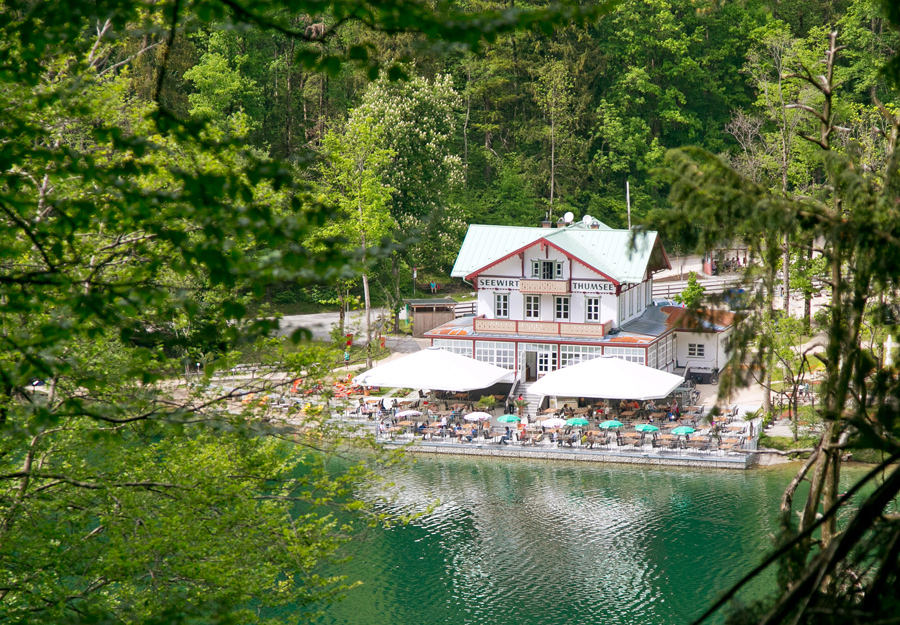
Yes, nothing wrong with your eyes: a LAKE! And a damn beautiful one too, with a wonderful view on the Bavarian Alps, a complete immersion into unpolluted nature, clear waters, plenty of fishes, and as a topping an antique though entirely restored inn right on the bank, enjoyed for holiday and relax (among so many others) also by Sigmund Freud.
All included in the package (well, except for the Alps…)

Thumsee lake

Such an opportunity doesn’t really occur every century, nor does it having to design a website for it.
Et voilà: the Thumsee lake in Germany, near the Austrian border and 20 minutes away from Salzburg (does the name “Mozart” ring a bell?).

Thumsee Wewbsite
Fotos by Kurverwaltung Bad Reichenhall