Hosting vs. Customer – the usual script

You find something’s wrong with your website – alright, sh*t happens, don’t panic. First things first, you check all you can on your side (WordPress, plugins etc.), but everything looks OK.
Oh oh… then there’s one and only one thing to do: call your host’s secret… opps, support service.

And the ordeal begins.

Exception: BoostedHost is one of my host and it seems to be still human 🙂

First step


Instead of the polite competent expert you were expecting, on the other end of the chatline you find an AI (Artificial OK but not necessarily Intelligent) tasked with getting rid of the most inexperienced or naive customers by suggesting that the issue is their own fault (“Was your computer properly plugged-in? Then you probably did this, or this, or that”.

Note: you can skip this step by just opening a ticket and hoping for a fast reply thus saving one PITA.

Second step


Once you manage to clear the hurdle (sometimes just shouting a couple of times “I want to talk to a human!!!” works fine), you’re put in contact with a junior serviceperson full of goodwill who does his/her best to understand your problem within the limits of his/her skimpy competence, to empathize with your sufferance and to praise you for your patience.
Don’t be harsh, he/she isn’t there to solve your issue but rather to pass on your complaint to a senior serviceperson. If you manage to hold your temper throughout those first two steps, you’re worthy of their attention.

Third step


The senior serviceperson sounds somewhat competent and professional (can tell a cache from a cake, and even more), listens to your complaints, suggests a couple of tests you already run as a matter of course, looks a bit annoyed that you thought of them first, then solves the issue by blaming you for doing something you know you didn’t.

Fourth step


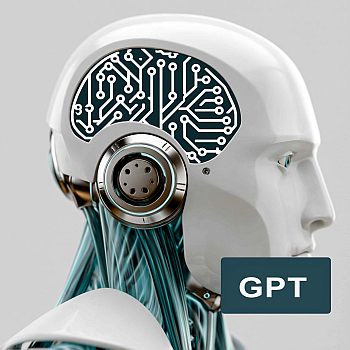
With your nerves on edge you pay a visit to ChatGPT and tell it in detail the established facts and your hypotheses – GPT is a gentlebeing and thus listens patiently without interrupting or jumping to conclusions.
From it you get all the understanding you need to placate you and a nice list of 3rd-degree questions to grill the senior serviceperson with (“yes or no, no maybe’s!”).

Fifth step


The senior serviceperson (not necessarily the one you already met), crushed by GPT’s 3rd-degree questions, finally admits that one of them hit the bull’s eye and the problem is actually their fault.
Without a word of apology or regret for their indifference and/or incompetence – the customer’s always wrong, huh?

My crystal ball says…

Dark clouds are gathering on the horizon:

many hosting companies are excited to announce that the AI is on board, ready to ‘help’ you design your websites to your taste, no web knowledge needed – just warm up and serve.

I’m afraid that such a grand entrance will encourage the Big Bosses to regard human competence as even more irrelevant than it is today. Then why squander dear money in expensive junior and senior servicepeople while the AI can take care of the customer support as well?
Let me hope that at least it will be ChatGPT

However at this point I’m wondering if there’s still space enough in my cellar for a small, old-fashioned tower desktop to configure as a server 🙁

Optical illusion: sign broken

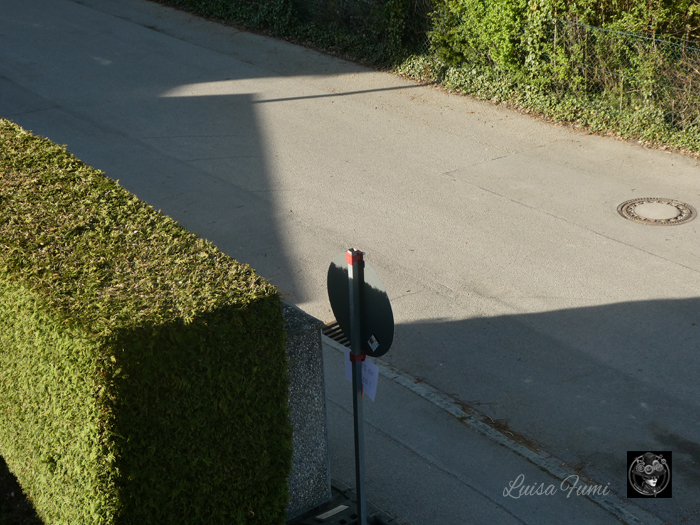
Casual, out of curiosity, just for fun as seen out of my window:

Construction site, plenty of no-parking signs (as as if one could park here at all…).

At one specific hour in the afternoon you look down and… wow, as if a giant had chomped off the upper part of the sign!
But no, that’s just the shadow of the hedge that darkens the lower part of the sign, while the rest mingles perfectly with the asphalt behind it.


😀

My websites: from Archive to Curated Collections

Over the years, my websites have gradually grown into very large image archives, bringing together historical reproductions, restored engravings, and AI-generated visual work.
Many visitors have explored them freely, sometimes using individual images as references, illustrations, or inspiration in ways I often discovered only by chance.

Recently, however, I began to feel that this structure no longer reflected the way I actually work.
Single images, isolated from their context, often lose part of their meaning.

What interests me increasingly is not accumulation, but coherence: images that speak to one another, forming complete visual worlds rather than disconnected fragments.

I was also aware that my customers often prefer to buy several images of similar content instead of a single one (botanical illustrations, more photos of a business center together, portraits of 18th century scientists, just to name a few).

For this reason, the sites are gradually being reorganized around curated thematic sets.
Here two of them on Antikstock


This transition also allows the visual material to be presented more clearly and consistently, while preserving the possibility of acquiring individual images when needed.

A smaller selection of standalone images and free resources will remain available, while new curated sets will continue to be added over time.
If you are interested in licensing or acquiring a specific image from a set, feel free to get in touch directly.

Thank you to everyone who has visited, shared, referenced, or quietly followed these archives over the years.

2025: A WEBHOSTING ODISSEY

Part One: The Past

Once upon a time…

I’ve been dealing with websites since short after the dawning of internet, fascinated by that then-new marvelous technology that allowed anyone endowed with a modicum of computer skills to reach everywhere in the world almost instantly – and for peanuts.
At the very beginning merely static webpages painstakingly assembled in naked HTML, my works quickly evolved into more sophisticated websites made with Dreamweaver and Flash, then inexorably into complex dynamic sites and online shops developed in Perl. Eventually, out of convenience, I landed on widespread WordPress, a comfortable web-development platform that I still keep using today in its classic mode without cumbersome blocks.

The first hosts

Yet a website is nothing but a jumble of bits unless it is placed on a server connected to the internet, and a server is provided and maintained by a host, the indispensable interface between a company and the World Wide Web. As you may easily guess, over those years I’ve seen all sorts: I’ve changed so many hosts that I’ve lost count of them. From some I run away scared, disgusted or fuming after less than an hour, by others I stayed for several years.

There are so many memories… the fondest one is about the CEO of a host whose name is now lost in the fogs of time, who kept an ante-litteram blog, “from my desk…” until he sold the company, that soon thereafter became bleakly impersonal.

An ominous experience…

Then there was another host that here I’ll call MaphYeah (not their real name), by which I lived the most sinister and at the same time most amusing experience of my web-designer career.
One day I found within my WordPress website hosted by MaphYeah the parasitic clandestine site of a Chinese company selling fake branded clothing – for which I would have been legally accountable. At my outraged complaint (I was paying an extra specifically for “security”) they demanded an additional hefty sum to cleanse my share of the server, implying subtly that, should I leave, the issue would follow me.

…but a nice discovery

Of course I flew the coop at once by cloning my website onto a different host and (better safe than sorry) added there as many anti-malware WP plugins as I could find on the web.
One and only one of them identified immediately a backdoor (who might have put it in there?) that I removed easily. Like this I found out what plugins boasted protection without providing any, and which one really worked – a most important discovery that took me a lot of toil and anger.

Since then my partner and I customarily add the “good” anti-malware plugin to the websites we design, as part of a new comprehensive security package of ours (inclusive of regular backups and much more) we offer to our customers.

Most web developers agree to take care also of SEO and diffusion, but nearly all of them neglect the ‘security’ part, which is growing increasingly essential as the web-ruthlessness expands uncontrolled.
No mere words: we thwarted successfully a considerable number of attacks to our customers’ sites (as well as to our own ones) and thus we know all too well what it means to swim among sharks and pirañas.

And what about that infamous host? For all I know “MaphYeah” is still alive and kicking, so beware! Before opening an account by an unknown host ask all relevant questions. If they ignore or evade them, run away as fast as you can.

Part Two: The Present

Almost satisfactory but… 🙁

Until a few weeks ago my host was A2Hosting, once considered to be among the best ones. For several years it really was, and I was quite happy with them: WordPress-optimized servers, satisfactory speed, friendly fast competent efficient customer service.
Nothing is perfect though, and even at their best they had two significant flaws:

– While the contract boasted infinite server memory (quite an ambitious goal, actually), in fact as I exceeded a 50 GB threshold they started bombarding me with emails saying that they were insured up to 50 GB and beyond that there was no backup, thus I’d better reduce the memory use. Not so nice indeed, they should have made it clear at the outset.
– After the first promotional year their annual fee grew really huge. But after all my image-intensive webpages loaded very fast and their service was reliable, not necessarily a given in my experience. So I stayed with them.

A2Hosting beheaded to Hosting

But alas, all good things come to an end: not long ago ‘A2Hosting’ became just ‘Hosting’, the company grew larger and the real troubles promptly began.
I had by them quite a number of interlinked websites, all with excellent internet visibility, and I could count on a considerable constant visitor flow.
Until one day a few weeks ago I noticed that on one of my sites all the pages showed up regularly – but without the images! Sort of annoying when it affects a site designed to sell images, right?
I opened a ticket – no reply, not even the usual boring automatic one. Pretty fishy.
Long story short, after one day they got in touch with me and soon the issue was solved. But as I asked for a technical explanation of what really happened, who tampered with my websites without my permission and why, they turned cagey talking vaguely about an unspecified “setting” and promised it won’t happen again. Not a hint of an apology.

Other people, other mood, other way to treat a customer. Downsizing? Greediness? Too many customers? I don’t know and I don’t care, As a (dearly) paying customer and a professional I expect clear explanations, not fogbanks. And many sad experiences suggested that once such an attitude creeps in, it stays.
Fortunately my annual contract with them would expire in a few weeks, about the time needed to find a better host and safely migrate 6 websites. A stroke of luck indeed: I canceled my contract and started looking for a more decent host.

Not an easy job indeed: they all use to promise the moon and stars, but very few of them deliver. However sometimes a long suffered experience comes in handy, at least by allowing me to read between the lines rather than only on them.

A new hope

So I eventually decided on BoostedHost: plenty of positive feedback, same quality as A2Hosting when they still worked OK, competitive cost even after the first year for the same performances.
And from the outset I’ve been pleasantly surprised by their kindness and availability, their competent advice, their prompt help in optimizing my sites’ cache by them to my full satisfaction.
All in all a great sigh of relief!
Another – if more subjective – positive point is the feeling that the team here is enthusiastic about their job and happy to provide help and solve the possible problems – something you don’t find around every corner.

All in all BoostedHost seem to have all the assets needed to grow into a really big hosting company, thus most likely they will. Will they also be able to retain their enthusiasm, their friendliness and their competence along and after the growth? I really hope so, and wish them so: that would finally put an end to my way too long and troubled odyssey in search of a most decent host 🙂

Part Three: The Future

While talking with other artists and photographers I get the feeling that most of them would be tempted to try and set up a website of their own but hesitate due to the lack of specific know-how.

Will AI provide the solution?

A few days ago I got an email from BoostedHost telling me that by them is now available for free (the magic words!) an AI-based system called ‘Orbit’ that should greatly help in the design of a website. So far I had no time to try it but I’m curious as hell: apparently all you have to do is to explain in plain words what you wish, choose pictures, themes and styles, and… voilà,
a perfectly optimized website without any hassle.
Generally speaking the popular “if it sounds too good to be true, then it probably is” is a very wise guideline, but a number of amazing sessions with ChatGPT and a long successful cooperation with MidJourney convinced me that there are exceptions. So why not give it a go?

With a bit of luck I’ll find the time and report to you about it in detail next time 🙂

If you liked this post I suggest to read How to sell stock images today too.

Gameover POD Galley – Ice Dance Sketches

new!

I made this set of (almost) black and white sketches using one of my personal styles developed on Midjourney.
I like them. It is not only about dancers but also about frozen movements in a moment of grace and black-and-white contrast: they speak of passion, raw energy, precision and elegance. And why not, freedom.

Pity I have not a single space left on my walls 😀

An own Print-On-Demand website?

Voilà, here it is!


How did I come to face such a feat?
First of all, for fun: I love making websites, that’s it. I had just completed a serious, demanding, challenging website – a historical archive – and needed to do something relaxing to rinse my brain… OK, that’s the truth, but not the whole truth: there was also a bit of commercial interest behind my resolution.

All began when I started visiting the usual popular Print-On-Demand sites…

… disguised as a buyer, in order to find out why I was selling so little on them – well, I actually did sell something there, but not enough to deserve any serious time or toil. I focused on the most obvious form of POD: the art that one hangs on the wall.

I was appalled by the prices:

would I buy anything that expensive myself? Definitely not! Unless perhaps in case of love at first sight, but that seldom happens.
Greed may certainly play a role in setting those high prices, but there must be something more to it. Let’s give it a thought:

First question:
why should one buy a framed work of art somewhere halfway around the world and pay the outrageous shipping costs, when the bare printout would travel much cheaper and faster in a cardboard tube?

Then all it would take is a walk to the do-it-yourself shop around the corner to have it framed according to one’s taste, in a self-chosen frame, maybe also with a sheet of real glass (rather than those horrible acrylic substitutes that would survive the shipping). Which would save about 3/4 of the total cost.

But that’s not all.

Second question(s):

who prints the work of art you choose, and on what paper, and what kind of printer do they use?
Most of the times the colors you see on your monitor don’t look very much like those you see printed on paper.

Who checks the color rendition?

And the diffusion effect?

And the overall quality of the finished work?

Then a disturbing thought came in without knocking:

of course the POD website gets the lion’s share, but also the printers must have their slice of the pie, and the packagers, and the shipment company… what’s left for the author is but laughable pocket change 🙁

Which encouraged briefly the sneaky temptation to bypass at least the POD sites and go directly to those sites that offer printing&shipment as a service… but alas, nothing doing: unguaranteed printing quality, long or very long processing times (up to 2 weeks!)… better forget it.

All of the above looks pretty disheartening, but I’m stubborn: my glorious printer can handle up to A3+ paper sheets (13” x 19”), quite a respectable size for a picture on the wall. A high-quality printing on it takes a mere couple of minutes of my time. I’m free to choose the best possible paper with the right grammage, texture and consistency. I have an encouraging constant number of visitors who show up in my websites, thus there’s no need for advertising…
So why not?
If it works, fine. And if it doesn’t, at least I learnt something new and had my fun 🙂

As a matter of fact I already had a lot of fun thinking of what would fit best on a wall and devising the proper mockup images to convey the mood to my visitors – here too MidJourney, adequately flogged and directed, proved to be a great limitless resource.

The yuck side: bureaucracy

Death and taxes are notoriously inevitable, and in this case the taxes were the belle of the ball: I had to comply with the EU legislation on VAT applied to member states, which makes a sharp distinction between digital goods (images made of impalpable bits) and tangible objects (images printed on palpable paper), thus taxing them slightly differently – bureaucrats love to wallow in such byzantine subtleties. Fortunately enough I have several websites, so I can place the impalpable stuff on one of them and the palpable stuff on another.

The novelty: Tarots on demand


While I was at it I also designed a couple of sets of author-signed tarots to be printed on demand.
It posed some challenges such as finding out the proper paper, learning how to laminate it, improvising a device to cut them out precisely by hand and round up the corners comme il faut, finding the right boxes to dress them up appropriately for their travel to the customer… live and learn 🙂

Have a look at them – you’ll find an (almost) classical deck as well as a retro-steampunk one with a pinch of humor scattered here and there – the latter, I confess, being definitely my favorite 😀

RUNWAY brush second round

Still testing the RUNWAY free version to generate movies from images.

I was pretty curious about the new brush tool.
From my Midjourney-generated images I chose a beautiful Labrador pet stretched on the floor near the fireplace

Without prompt, only by brushing the dog head and the fireplace like you see above, I managed to get this small movie here

I confess this not the first attempt. I had to play a little with the brush parameters to tune it, but now I understand better how this great tool works 😀

As usual, we need to develop some dexterity, not very different to practicing with Photoshop, paintbrushes, camera or other established means – whatever the ones who choose to remain behind might object.

Literary divertissement

When I married him a few centuries ago I didn’t know he was a wise man, and now I know for sure he isn’t, but every now and then he still likes to play that part and it’s easier to humor him than to force his feet down to the earth 😉
So one day my lifemate woke up with the notion of challenging ChatGPT by pushing it to (and possibly beyond) its limits.
I did nothing to stop him (it would have been quite a job) and went about my own business for the best part of a morning.

As I eventually heard a grunt coming from his room I understood that it was my duty to put a little bandaid on his wounded pride: a mere machine, ChatGPT , had beaten him bluntly at erudition, languages command, fantasy, humor and heaven knows how many other skills, and he didn’t come even close to forcing it beyond its limits.

That’s how it went:

Q:
Hi GPT, long time no see! Today I have a challenging task for you: a brief essay written (in Italian) in the style of Umberto Eco – haughty, omniscient, philosophizing, patronizing, slightly humorous – about the art of spreading butter on bread and the bad habit of doing it diagonally rather than orthogonally. Are you up to it?

A:
Salve! È un piacere rivederti! Sì, sono pronto ad affrontare la sfida che mi hai proposto. Scrivere in stile Umberto Eco è un compito impegnativo, ma farò del mio meglio per emulare il suo tono haughty e filosofeggiante. Parliamo quindi dell’arte di spalmare il burro sul pane e dell’abitudine infame di farlo in diagonale anziché in modo ortogonale.

In primo luogo, è importante comprendere che l’atto di spalmare il burro sul pane non è una semplice questione di necessità fisica. Piuttosto, rappresenta un’opportunità per l’espressione artistica e per l’individuazione della propria identità culinaria. Come l’arte della pittura o della scrittura, anche spalmare il burro richiede una certa attenzione alla forma e alla tecnica. E come in ogni arte, ci sono regole che devono essere rispettate.

Ma qui sorge il problema. Ci sono coloro che, per ignoranza o per volontà di contestazione, violano queste regole basilari spalmando il burro in diagonale. Questa abitudine è un’offesa all’occhio e alla mente, perché distrugge l’armonia e l’equilibrio che dovrebbero essere al centro di ogni espressione artistica. Invece di un risultato pulito e ordinato, ci troviamo di fronte a un caos insensato, che ci lascia solo una sensazione di profonda inquietudine.

Ma perché, si potrebbe chiedere, spalmare il burro diagonalmente è così malvisto? La risposta è semplice: perché viola la simmetria. La diagonale rappresenta un’asimmetria innaturale, che destabilizza l’intero schema. Invece, spalmare il burro in modo ortogonale consente di mantenere l’equilibrio perfetto tra le due metà del pane. Inoltre, questo metodo garantisce una copertura uniforme del burro su tutta la superficie, evitando così la dispersione del sapore.

In conclusione, l’arte di spalmare il burro sul pane è un’attività che richiede disciplina e rispetto delle regole. Non c’è spazio per la creatività selvaggia e anarchica, perché questo sarebbe un affronto alla bellezza e all’ordine del mondo. Spalmare il burro in modo ortogonale è il modo giusto di fare le cose, perché garantisce la simmetria e l’equilibrio. Se tutti seguissimo questa semplice regola, il mondo sarebbe un posto migliore, almeno per quanto riguarda la preparazione del pane e del burro.

Q:
Extraordinary! You really sounded like him, my compliments!

A:
Grazie mille per il complimento! Sono felice di aver soddisfatto le tue aspettative. Scrivere in stile di autori noti è una sfida stimolante e gratificante per me, e mi fa piacere sapere che il mio tentativo è stato apprezzato. Se hai bisogno di altro aiuto, non esitare a chiedere!

Q:
A minor technical info: a good Italian equivalent of “haughty” would be “altezzoso“. There are more, of course, but IMO that’s the best one.
Let’s now try a different (but not less challenging) one: a brief essay (in English) about the foolishness of believing in the healing power of chanting litanies, in the style of Bertrand Russell (self-assured, pragmatic, strictly rational, slightly pedantic). Would you try?

A:
Certainly! Bertrand Russell is known for his skepticism and commitment to rationality, so I’ll do my best to capture that tone in discussing the topic of chanting litanies for healing purposes.

It is a curious thing that despite the incredible advances in modern medicine, there are still those who cling to ancient practices and superstitions in the hope of achieving healing. One such practice is the chanting of litanies, often accompanied by ritualistic gestures and other mystical elements.

It is worth noting that the purported healing power of chanting litanies is not supported by any empirical evidence or scientific research. While the placebo effect may provide some temporary relief for those who believe in such practices, it is not a reliable or effective method of healing.

Moreover, the use of chanting litanies for healing purposes is predicated on a flawed understanding of the nature of illness and disease. Illnesses are not caused by malevolent spirits or other supernatural forces, but rather by physical and biological factors that can be studied and understood through scientific inquiry.

In light of these facts, it is difficult to justify the continued belief in the healing power of chanting litanies. To do so is to reject the rational and evidence-based methods of modern medicine in favor of ancient superstitions and myths.

It is understandable that people may turn to such practices out of desperation or a desire for comfort in times of illness, but it is important to recognize that such practices are ultimately futile and potentially harmful. Rather than relying on chanting litanies, we should trust in the proven efficacy of modern medicine and scientific research to address our health concerns.

In conclusion, the belief in the healing power of chanting litanies is a misguided and foolish notion that is unsupported by any empirical evidence. As rational and pragmatic individuals, we must reject such practices and rely on evidence-based methods to address our health concerns.

Q:
GREAT!!! Shall we now try with Immanuel Kant (in German) about the meaning of checking the pocket watch even though one knows perfectly well what time it is?

A:
Gewiss! Immanuel Kant ist bekannt für seine scharfsinnigen philosophischen Untersuchungen, also werde ich versuchen, seinen Stil auf Deutsch zu imitieren, während ich über die Bedeutung des Überprüfens der Taschenuhr spreche, obwohl man genau weiß, wie spät es ist.

Es ist eine interessante Frage, warum wir uns manchmal gezwungen fühlen, unsere Taschenuhr zu überprüfen, obwohl wir bereits genau wissen, wie spät es ist. In diesem Fall scheint es, dass die Handlung des Überprüfens der Uhr nicht wirklich einen praktischen Nutzen hat, sondern eher von einer Art innerer Notwendigkeit getrieben wird.

Um dieses Phänomen zu verstehen, müssen wir uns der Analyse des menschlichen Geistes und der menschlichen Natur zuwenden. Im menschlichen Geist gibt es eine Vielzahl von Vorstellungen, die sich aus der Erfahrung und der Vernunft ergeben. Diese Vorstellungen können uns dazu führen, bestimmte Handlungen auszuführen, auch wenn sie keine offensichtliche praktische Bedeutung haben.

Im Falle des Überprüfens der Taschenuhr scheint die Vorstellung der Zeit ein entscheidender Faktor zu sein. Die Zeit ist ein grundlegendes Konzept in unserem Leben, und die genaue Kenntnis der Zeit kann uns ein Gefühl von Sicherheit und Kontrolle vermitteln. Das Überprüfen der Uhr kann also als eine Art Selbstversicherung dienen, die uns hilft, unsere Beziehung zur Zeit und unsere Fähigkeit, sie zu kontrollieren, zu stärken.

Es ist jedoch wichtig zu beachten, dass diese Vorstellung der Zeit nicht unabhängig von unseren Erfahrungen und unserem sozialen Kontext ist. In einer Welt, in der Zeit oft als knappe Ressource betrachtet wird und pünktliches Erscheinen als wichtige Tugend angesehen wird, kann das Überprüfen der Uhr auch als eine Art sozialer Konformität angesehen werden.

In jedem Fall ist das Überprüfen der Taschenuhr ein interessantes Phänomen, das uns etwas über die menschliche Natur und unsere Beziehung zur Zeit und zur Gesellschaft sagt. Indem wir uns bewusst machen, warum wir diese Handlung ausführen, können wir ein tieferes Verständnis für uns selbst und unsere Umgebung erlangen.

Q:
Hervorragend!!! Du bist ein Wortmeister, keine Frage!
Wollen wir nun mit einer Kurzgeschichte von Miguel de Cervantes versuchen, in seinem typischen Castellano, über don Quixote als er über einen Schnürsenkel stolpert, während er eine bedrohende Windmühle angreift?

A:

Claro que sí! Miguel de Cervantes es uno de los grandes maestros de la literatura española, y su estilo inconfundible es un desafío que estaré encantado de asumir. Aquí va mi intento de escribir una pequeña historia sobre don Quijote tropezando con un cordón mientras ataca un molino de viento amenazante:

El buen caballero andante don Quijote de la Mancha, armado con su lanza y su coraje, avanzaba decidido hacia el molino de viento que se alzaba ante él como una amenaza a la paz y la justicia. Pero justo cuando estaba a punto de alcanzar su objetivo, don Quijote tropezó con un cordón que se había desatado de su bota, y cayó al suelo con un estrépito.

El viento se burló de él, agitando las aspas del molino con más fuerza que nunca. Pero don Quijote no se dejó desanimar por su accidente. Se puso en pie con dificultad, ajustó su armadura y empuñó su lanza con renovado vigor. Ahora estaba más decidido que nunca a derrotar al enemigo que tenía ante él.

Sin embargo, la experiencia lo había dejado un poco desconcertado. Mientras se acercaba al molino, se preguntaba si había sido un signo de los dioses, una advertencia de que no debía continuar con su loca empresa. Pero no había nada que pudiera detener a don Quijote en su búsqueda de la gloria y la aventura.

Así que se lanzó al ataque, su lanza apuntando al corazón del molino. Las aspas giraban con una velocidad vertiginosa, y don Quijote se preparó para el impacto. Pero cuando llegó el momento, la punta de su lanza se desvió, y la hoja quedó atrapada en una de las aspas.

Don Quijote se tambaleó, y cayó de nuevo al suelo, esta vez con un sonido más apagado. El molino de viento se rió de él con fuerza, y las aspas lo cortaron en pedazos.

Así terminó la aventura de don Quijote contra el molino de viento, una historia que ha pasado a la posteridad como un ejemplo de la locura de la que puede ser capaz el ser humano. Pero aunque don Quijote haya muerto, su espíritu de aventura y su lucha contra la adversidad siguen inspirando a muchos hasta nuestros días.

Q:
You’re exceeding all my expectations!!! Now, last for today, I’d like to hear Socrates (in ancient Greek as well as in a good English translation) explaining a young disciple how does he know that he knows nothing. That’s a real challenge but I think you’ll manage!

A:
Ἀγαθός! I will do my best to write a dialogue between Socrates and a young disciple on the topic of knowing one’s own ignorance. Here’s my attempt at writing it in both Ancient Greek and English:

Ancient Greek:

Σωκράτης: Χαῖρε, ὦ μαθητά. Τί ἔχεις ἐννοοῦν;

Μαθητής: Χαίρω, Σωκράτη. Περὶ τίνος ἂν οἰηθείην εἰδέναι;

Σωκράτης: Ἐν τῷ μηδὲν εἰδέναι, ὦ μαθητά.

Μαθητής: Καὶ πῶς οἶσθα τοῦτο, Σωκράτη;

Σωκράτης: Δοκεῖ γάρ μοι, ὦ μαθητά, ὅτι οἱ πολλοὶ ἄνθρωποι τὰ περὶ τὰς τοῦ βίου ἀρχὰς οἴονται εἰδέναι, ὅτε μὴ οἴονται, καὶ οὐχ ὑπολαμβάνουσιν, ὅτι οὐκ οἴδασιν. ὅτι οὖν ἐγὼ τούτους τοὺς πολλοὺς ἐρωτῶν, τί ἐστιν τὸ βέλτιστον, προσεύχομαι μὴ ἐνταῦθα γελοιωθῆναι. ἔστιν δὲ τοῦτο ἡ ἀρετή, ὦ μαθητά, τὸ εἰδέναι τὸ μὴ εἰδός.

Μαθητής: Καὶ τίνος τοῦτο ὠφελεῖ, Σωκράτη;

Σωκράτης: Ἀνθρώπων τῶν σοφῶν, ὦ μαθητά. ὁ σοφὸς γὰρ οὐδὲν οἶδεν, ὅτι δέ οἶδεν οὐδέν, τού

Q:
Oh oh, your response was truncated after “ὅτι δέ οἶδεν οὐδέν, τού“… can I have the rest?

A:
Τούτου ἕνεκα φαίνεταί μοι καὶ τὸ θεῖον ἐπιστήμης μάθημα εἶναι, τὸ γιγνώσκειν τε καὶ μὴ γιγνώσκειν ὡς ἂν ἐπιστήμην ἔχοντα καὶ ἀγνοοῦντα. καὶ ἐν τούτῳ πείθομαι τῷ Διῒ μαρτυρούμενος ὅτι οὐδὲν εἰδὼς ἐγὼ σοφὸς εἰμί, μόνον τοῦτο ἴσθι μοι γεγονέναι, ὅτι πολλὰ οὐκ οἶδα.

And now, my dear young disciple, do you understand why I claim to be the wisest man in Athens, precisely because I am aware of my own ignorance and constantly seek to gain true knowledge? It is only by admitting our own lack of knowledge that we can begin to truly learn and grow. Remember, the unexamined life is not worth living.

Q:
Fantastic! THANK YOU GPT, you’re great!

A:
You’re very welcome! It was a pleasure to assist you with these writing prompts. Don’t hesitate to ask me if you have any more requests in the future.

Q:
Well, upon a second thought you skipped the main Question: how did Socrates know that he knew nothing, as he knew nothing?

A:
Ah, I apologize for not addressing that part of your question. Socrates arrived at his famous statement “I know that I am intelligent, because I know that I know nothing” through the process of questioning and examining his own beliefs and those of others. He believed that true wisdom comes not from having knowledge, but from recognizing the limits of our own knowledge and continually seeking to expand it.

By questioning others and examining their beliefs, Socrates found that many people who claimed to be knowledgeable were actually ignorant and held contradictory beliefs. This led him to conclude that true wisdom lies in admitting one’s ignorance and constantly striving to learn and grow.

In essence, Socrates knew that he knew nothing because he was aware of his own ignorance and recognized that true wisdom comes not from having knowledge, but from recognizing the limits of our own knowledge and constantly seeking to expand it.

Q:
Don’t worry, I was just pulling your leg… 😉

A:
Ah, I see! Well, I’m glad to have been able to provide a thorough answer regardless. If you have any more questions or prompts, feel free to let me know!

Senior Gym

Visual Journey, embracing Flexibility and Strength in the Golden Years
A new collection at Gameover’s Atelier exploring per images the benefits of physical activity for seniors:
Improved Flexibility
Enhanced Strength & Muscle Tone
Better Posture & Balance
Increased Bone Density
Boost in Cognitive Functions
Portraits created using advanced artificial intelligence algorithms privately generated, intensively post-processed by (human 😉 ) hand and upscaled without losing resolution.