Food for thought

Let’s face it: we are all more or less unsettled by an AI being able to simulate quite accurately what we so proudly call ‘human creativity’.
OK, it’s all based on human work, no one argues that. And it’s still us humans who decide if, how and how much of its outcomes to use, integrate or elaborate. But…

… but once unleashed the AI seems to be able to generate works of its own (no collages, no ready-made pieces sticked together, no copy & paste) and we humans can appreciate them and often even mistake them for real human art – until we are told where they come from.

And, no matter how such a devilish algorithm was created, it is still nothing more than a piece of software running on a piece of hardware.

Which elicits a rather disturbing question: are we proud humans really so predictable? Is our much vaunted, unique, irreplaceable creativity just a mere algorithm running between our ears? Are we really so great as we think?

Gameover’s Atelier: AI+Human Collection

For some of months I’ve been privately experimenting with Midjourney, and I’m constantly witnessing an enthralling, almost incredible evolution. As I’m using it quite intensively (2638 images generated so far) I’ve reason to believe that I’m also partaking in its ‘training’ 🙂

Self-awareness?

That’s a big word and IMO applying it to today’s AI would (still) be a gross overkill. However in those three months the improvement in composition and quality of the outcome were really astonishing – the ‘thing’ is definitely growing up and learning a lot!

As it may be expected, pretty often there’s plenty of post-processing and upscaling work to do and you end up with an image quite different from the original one. But not always. Sometimes all you need to do is to prompt the bot with the proper wording over and again until you like it, and then to touch up the final outcome just a little: in the end you find yourself thinking “OMG, that’s exactly what I had in mind!”.

I’ve read a lot about millions (or billions) of images being ‘stolen’ from their creators to train the AI – implying that everyone should be entitled to the correspondent royalties. But is it really theft, or are those images just used as machine-learning to point the AI towards some kind of independent creativity?

I’d rather go with the latter, also in view of the incredibly fast evolution of Midjourney.

Just consider…

Think for a moment: when you take a pic of a cathedral do you really wonder if you should pay a royalty to the bishop, or maybe to the architect who designed it? And does such a thought bother you when you photograph the work of a painter from the past, or a car whose logo you’ll remove in the post-processing, or someone on the street who agrees to it with a smile?

Now don’t you tell me that you aren’t drawing inspiration from somewhere when you create a work of your own – maybe from dozens of watermarked images, or from the pictures on an ancient book, or from a scene you just saw and found worth using, or, or…

Drawing inspiration is a human quality and this sort of empathy is the very base of creativity: you create from the world that surrounds you – no world, no creation.

I’ll agree, it’s quite disconcerting, even disturbing, to apply such concepts to a non-human entity, a mere ‘thing’ made of metal and silicon chips. But we shouldn’t forget that this ‘thing’ has been designed and made by humans, and humans are those who use it as the tool it is.

Setting aside philosophy, since this kind of images of mine were received well by Adobe and started selling promisingly I selected some and uploaded them to my Gameover’s Atelier. For the time being I limited my choice to simple subjects that I however find attractive and looked at from an unusual point of view. Should anyone be interested, they can be purchased pretty cheap – outrageously cheap indeed (50% down!) if bought before coming Christmas 😀

I had plenty of fun choosing and commenting them, and I’ll keep adding more and more every day.

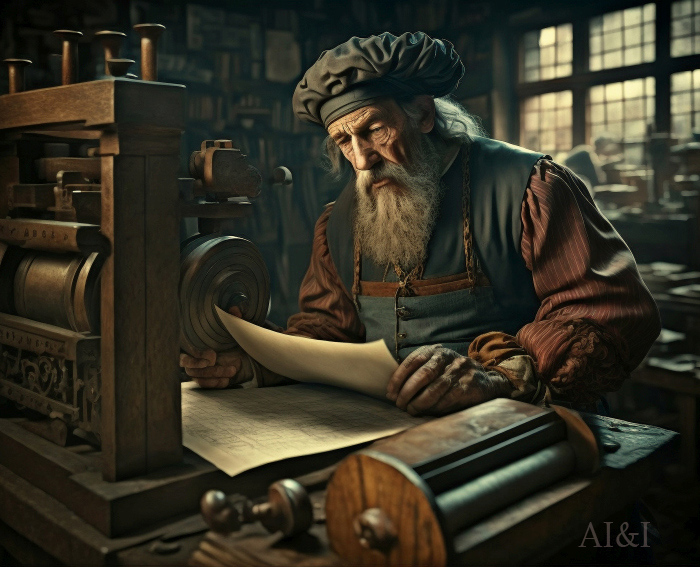
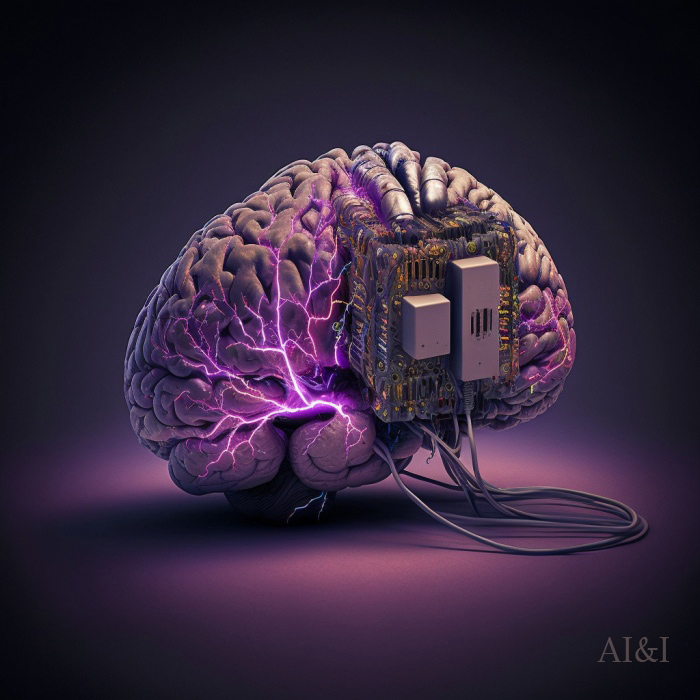
Note: the opening image on top was initially created by me with Midjourney’s bot and carefully touched up. The Florentine merchant depicted there doesn’t exist and never did; nor can you buy a “Pear Computer”, to the best of my knowledge 🙂

New beta engine at Midjourney

–v 4, quite impressive!

The best approximation to the usual mess at my husband’s team lab 😀 😀

Both images are generated by Midjourney only through text and parameters.
The outcome is surprisingly quite familiar to me: it feels like to be there.

Sorry folks, working with AI is immensely creative and a big source of fun.

De profundis

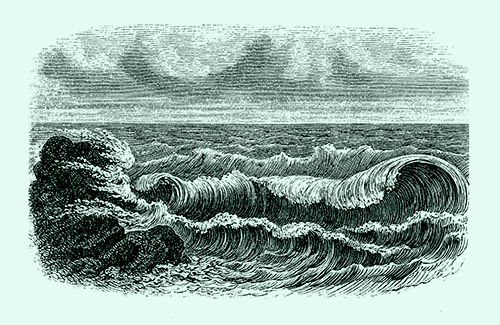
Paddle steamer in the storm by copyright luisa fumi.

It takes so little to kill the last glimmer of hope… I complained to Alamy about their mass-few-¢-sale of this month, and in reply I got this :

Hi Luisa,
Thanks for your email. I can see that these sales are through our distribution scheme. Which you are opted in for.
Our Distribution scheme is optional and under the section of your account titled “Additional Revenue Option”. As the title suggests it’s an opportunity to earn additional revenue through territories that Alamy doesn’t quite reach with direct sales. Every year our Distribution scheme returns a sizable 15% of our total revenue and so we’d recommend being part of it.
You can only opt out or remove countries in April of every year; this is so we can give our distributors a consistent collection.

Kind regards,
Chantelle

(note: I opted out from their ‘Novel use’ option last April 1st)

Let’s brush off the tiny coat of perfunctory politeness and have a closer look at the gist:

  • So I’m “opted in for”: did I opt in or was I opted in? I don’t remember having checked a box “feel free to sell my images for a few pennies and give me a minute fraction of that”.
  • If their Distribution scheme returns “a sizable 15% of their total revenue”, how many millions of images should they sell on the ‘miserable’ market to make 2¢ for the distributor, 2¢ for themselves and 1¢ for me, and still have a decent income?
    The 22 images of mine they undersold this way got them a total of $1.55 and a mightily irritated contributor about to abandon ship. Perhaps the time has come to move the rampant yuppie who had the Great Idea to the cleaning team.
  • So nice that I can opt out of such an economical disaster in April of every year, indeed. It would be even nicer though to know what exactly one has to opt out of in order to prevent one’s images from being given away like confetti.

“Fair play” has many opposites, and nowadays keeping the rules where nobody sees them has become a very popular one.

There is little doubt left, they definitely are shutterstocking. It’s damn sad to see an agency that used to have fair play as their flagship sink this low 🙁

GRASP ALL, LOOSE ALL

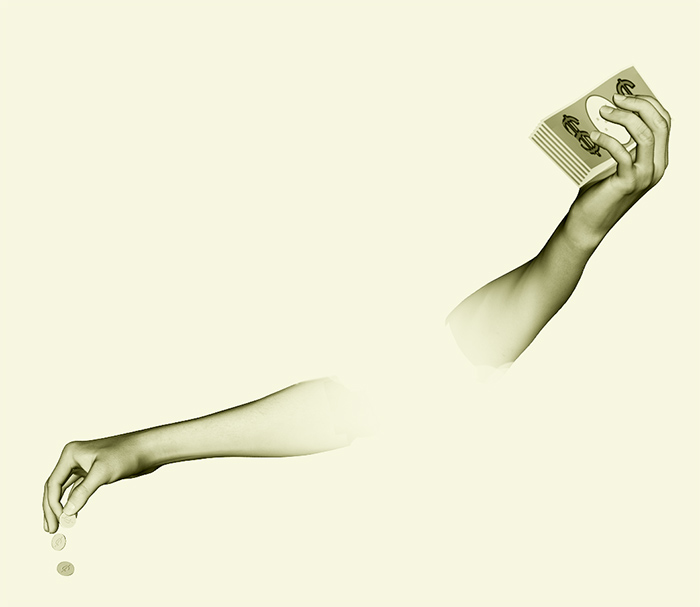
scrooge by .

Old proverbs contain plenty of ageless wisdom. If only people noticed this timely…

Unfortunately though the top-level managers of the microstock agencies seem to be too busy to devote their valuable time to such menial thoughts. Rumors have it that sooner or later, while watching complacently the increasing revenues, a brilliant notion pops out between some rosy-cheeked executive’s ears: “Why should we leave so much money in the hands of the morons that hand us their pictures? We have the market, we have zillions of well-selling images, we dictate the rules.

We all know where that leads: it’s the so-called “Shutterstock effect”. Curtail drastically the contributors’ shares, sell lots of images at bargain prices, give to the beggars their two cents, ignore the chorus of moans, anger and insults that raises from the rabble, see your income grow, shake hands with the colleagues, I’m a genius!

And then, after a few months, the backlash: many contributors feel cheated or even insulted and close their accounts, many more delete their best pictures leaving behind just crap a blind man wouldn’t buy, the incoming flow of images drops to a trickle, the buyers notice the drop in quality and go buy elsewhere, the income curve falls miserably (dammit, maybe with some Viagra…).
And eventually the friendly suggestion “you better start looking for a new job”. But then it’s too late, the damage is done.

Sad as it is, now it appears to be Alamy’s turn. In the last days, without warning or asking for an OK, they surprised the contributors world by selling off a large number of pictures for a few cents, and those who demanded an explanation whatsoever bumped their heads against a pretty long local holiday – no one there to reply, what a coincidence!
One could hope that it’s just a misunderstanding of sorts, perhaps a glitch in the software or a silly human error, but the symptoms are all too clear, and the suspicion that Alamy is shutterstocking is overwhelming.

That’s quite a shock indeed: not long ago they still had a spotless reputation as an agency that cared for the contributor’s satisfactions, paid reasonably fair shares, and provided good help when needed. More than a little demanding perhaps, if you think of the ordeal of keywording it adequately, but you cannot expect such a high-level agency to accept just any picture: they sell excellent quality and are entitled to demanding it.
They are my agency, we do a good job together… good old days? 🙁

Where will all this end? Hard to say that without a top-grade crystal ball and some powerful psi powers. However, judging by the microstock market trend in the last couple of years, a reasonable modicum of pessimism would suggest that most of the major microstock agencies will slowly (or even not so slowly) collapse under the weight of their own greed.

The scenario we could expect in a near future might show us two or three large surviving microstock agencies selling mediocre images very cheap by the ton on behalf of countless grumbling but resigned private contributors, a few ad-supported artistic websites selling very little, the usual lot of websites offering as “windows backgrounds” good images for free (but for personal use only).
And, with a bit of luck, a constellation of sites owned, managed and constantly fed by skilled photographers and graphic artists offering directly to the buyer very high quality images at a fair price, no bloodsucker share included.

If you want the best apples at a decent price, go knock directly at the farmer’s door…:-D

Two book covers at Arcangel!

book-covers by .

It was quite a surprise. Last week out of the blue Arcangel sent me an email asking for my billing data as I sold two book covers. In the following communication I learned all the details about the books.
I looked for them online, nothing yet. Anyway here are the images:

My account at Arcangel: 97 images (2 in keywording), an approval rate of 29%, a hard work to get tuned with the right mood in order to produce an approved image.

Okay, I can do more and apply more diligently 🙂

A big thank to Alex Rotenberg who on his brutally honest blog recommends to apply to Arcangel!

How to sell digital goods

featured by .

Why did I migrate from Easy Digital Downloads to WooCommerce ?

I ‘m a webdesigner in love with digitalart. I’m still selling in a comfortable way my images (photos, illustrations, vintage stuff, 3D renderings) at micro-stock and stock agencies.
But my goal is to sell also by myself. As I can buildup websites, I launched AntikStock to sell a niche of mine: my illustrations restored and elaborated from the huge antique book collection of my property.

At a first glance Easy Digital Downloads (EDD) would really look the easy way to sell downloadable goods. But a rather disturbing (arithmetical!) issue (*) popping up changed my point of view and induced me to look seriously for alternatives and compare performances.

While comparing I found out that WooCommerce offers not only a quite solid E-commerce platform for virtual downloadable goods, but also much more interesting features free of charge.

A few examples: :

  • to duplicate a product to sell with WooCommerce is free, on EDD you have to pay 29usd/year only for this simple feature!
  • to comply with the EU VAT rules is free of charge, no way can EDD compete for free
  • cross-sells and upsells are included, no need to pay for the corresponding EDD options anymore.

I could go on further, I would just add that I completed seamlessy my migration owning an elegant new shop with many more features totally free of charge and – the cherry on top – with a beautiful free image zoom.

(*) As you may know, selling digitally downloadable goods in EU imposes a set of pretty complicated rules made by bureaucrats for bureaucrats, but we can cope with them. EDD behaves okay at checkout time unless you introduce a discount. If you do that a sum of round-up errors appears in the VAT calculation; as quite surprisingly the net amount in this case is not shown, the error goes easily unnoticed – until a diligent official remarks such a few cents mismatch and then things are likely to turn interesting. Of course I reported it, but EDD didn’t seem to take the matter seriously.

Good morning AntikStock!

champagne-600 by .

After a brief running in of vintage-nostalgia.com as my experiment was more positive than expected I decided it would be worth taking a step further, treasuring the previous experience. I made a few improvements:
– a more professional name
– a more reliable E-commerce platform
– bigger sample images (still watermarked)
– much more accurate tagging

Then I buried good old vintage-nostalgia in the garden and launched antikstock.com.

I’m pretty confident that, working on a profitable niche of the image-stock market, a professional website of my own shall be the best way to sell exclusive images decently. It is not time yet to say goodbye also to the best stock agencies, but if the trend stays worrisome the lifeboat is ready.

In this shipwreck I’ll have one advantage and one big flaw: I’m passionate about my work of restoring, elaborating, painting, making collages of antique illustrations from my huge ancient book library, which is growing almost uncontrollably.

On the other hand I’m aware that a good promotion on the social is important, and I have little time for that. We shall see…