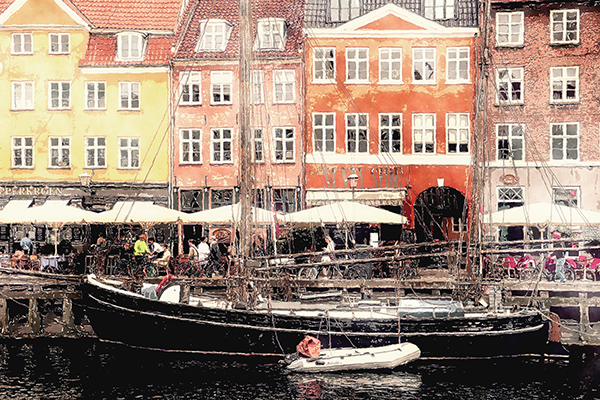
My impressions of an enchanting city I love very much
(digital watercolors from my photo images)




Web, Photography & Digital Art

My impressions of an enchanting city I love very much
(digital watercolors from my photo images)

I ‘m a webdesigner in love with digitalart. I’m still selling in a comfortable way my images (photos, illustrations, vintage stuff, 3D renderings) at micro-stock and stock agencies.
But my goal is to sell also by myself. As I can buildup websites, I launched AntikStock to sell a niche of mine: my illustrations restored and elaborated from the huge antique book collection of my property.
At a first glance Easy Digital Downloads (EDD) would really look the easy way to sell downloadable goods. But a rather disturbing (arithmetical!) issue (*) popping up changed my point of view and induced me to look seriously for alternatives and compare performances.
While comparing I found out that WooCommerce offers not only a quite solid E-commerce platform for virtual downloadable goods, but also much more interesting features free of charge.
A few examples: :
I could go on further, I would just add that I completed seamlessy my migration owning an elegant new shop with many more features totally free of charge and – the cherry on top – with a beautiful free image zoom.

(*) As you may know, selling digitally downloadable goods in EU imposes a set of pretty complicated rules made by bureaucrats for bureaucrats, but we can cope with them. EDD behaves okay at checkout time unless you introduce a discount. If you do that a sum of round-up errors appears in the VAT calculation; as quite surprisingly the net amount in this case is not shown, the error goes easily unnoticed – until a diligent official remarks such a few cents mismatch and then things are likely to turn interesting. Of course I reported it, but EDD didn’t seem to take the matter seriously.

After a brief running in of vintage-nostalgia.com as my experiment was more positive than expected I decided it would be worth taking a step further, treasuring the previous experience. I made a few improvements:
– a more professional name
– a more reliable E-commerce platform
– bigger sample images (still watermarked)
– much more accurate tagging
Then I buried good old vintage-nostalgia in the garden and launched antikstock.com.
I’m pretty confident that, working on a profitable niche of the image-stock market, a professional website of my own shall be the best way to sell exclusive images decently. It is not time yet to say goodbye also to the best stock agencies, but if the trend stays worrisome the lifeboat is ready.
In this shipwreck I’ll have one advantage and one big flaw: I’m passionate about my work of restoring, elaborating, painting, making collages of antique illustrations from my huge ancient book library, which is growing almost uncontrollably.

On the other hand I’m aware that a good promotion on the social is important, and I have little time for that. We shall see…

Shutterstock never was my main microstock source of income, but they gave a decisive push to this bizarre new situation where stock images sold for free or nearly (a few cents) cover the best part of the market.
In this new age microstock is no more a gratifying source of revenue. What to do?
Alright, set aside the dreams, forget earning more, let’s just contain the collapse.
A quick analysis of my situation showed that the my ‘best’ agencies were – in that order – Adobe, Alamy, Istock and Shutterstock. Other minor agencies (Dreamstime, Pond5 etc.) were almost negligible as they provided just very occasional income.
In the light of that I changed my strategy, which proved to be a fortunate move: in some way I thus managed not only to contain the dreary “Shutterstock-effect” but also to stay stable at the previous level.
What did I do, exactly?
Chronologically:

As a result quite unsurprisingly the minor agencies are selling much less for me but my sales at Alamy and Adobe jumped nicely up thus compensating the burial of my Istock account and the loss of my huge (LOL) Shutterstock income.
In this way I’m not earning much more than before, but changing my tactics produced a very nice side effect: I feel now really better 🙂
However this is just an intermediate step: I’m still looking for further opportunities that comply better with the new rules of the game. They are there, they always are, it’s just a matter of finding them.
And let see what makes Adobe now, the news are a bit uncomfortable … the game is changing again, but okay I can play 🙂

This is me in an ectoplasm version, having plenty of ghostly fun with my new camera.
My husband and I gave ourselves a Christmas gift in advance: the new DJI Pocket 2: a tiny pound of pocket-size camera with a great sharp sensor and a gimbal head allowing absolutely smooth 4K video clips at a very affordable price.

But I’m not going to describe the characteristics of this great new gadget here, you can find much more on YouTube and on specialized reviews. As I am not particularly fond of movies (I like still pics much more) I wondered if this pocket-size camera could replace in some way my good old one.
No sooner said than done, I began taking shoots outdoors and indoors with both and then comparing the outcomes.
My first images were accepted at Adobe, Alamy and Arcangel without arching a brow.
Voilà some of them:

Not bad at all 🙂

Since the microstock ship has begun to sink, thanks the Shutterstock coup de grâce, I gave some thoughts about escaping the frustration of the current situation.
It saddened me to see the Stock Coalition profile photos on FB : so many stunning images from many talented photographers on one side, and the fight for a few cents or (occasionally) a few dollars on the other.
This is not right.
These images tell a story: nobody should ever have to sell them this way.
Thanks to the suggestion of Alex Rotenberg’s Brutally Honest Guide to Microstock I applied to Arcangel, a stock agency that licenses images for book and disk covers. I had applied in the past in a lazy way and was discarded. Now, trying really to understand the mood of their images (and having fun doing it), I sent 20 resized pictures on one Sunday night and on the Monday morning after was instantly accepted!
Here a first batch of images:

I don’t know if this new adventure will sale well (if at all) but:
– in few days I learned about image processing more than in a decade
– I discovered the difference that ought to be between microstock and stock (the subject of my next post)
– I DON’T have to do the keywording job 😀 (I hate it even if is of paramount importance)
– I keep having fun discovering in my hard disks images not yet published and processing them in a quite different and emotional way

I always hear the same refrain: yes, they are fair indeed, pity though that they don’t sell much…
Actually so far my experience at Picfair had been… fair: for a few years I’ve been putting every now and then some images there, having three or four sales promptly paid in the meantime.
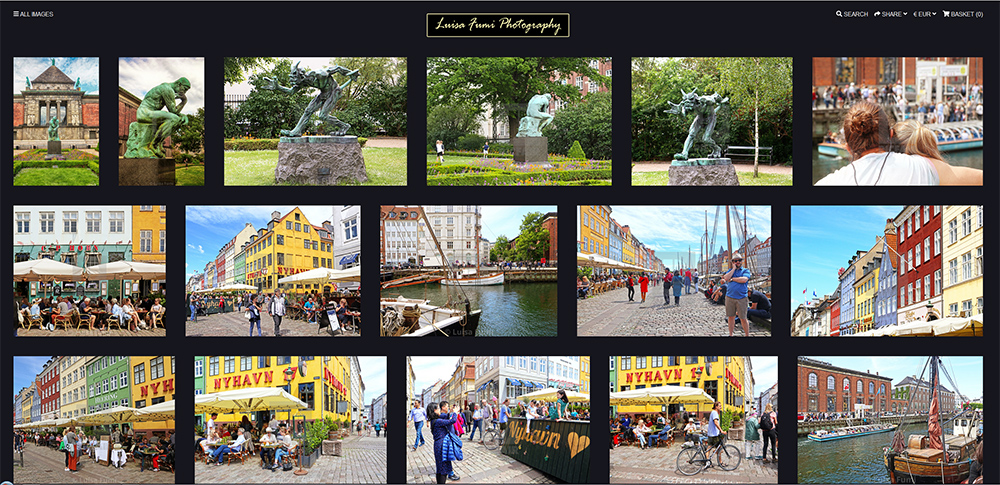
But times seem to be changing, and I decided that I need a personal photo website. I would know pretty well how to set up one myself, but for a small yearly fee Picfair offers me the possibility to have it under my own name, and as a very nice bonus also to sell my pictures as prints/posters/framed. So why not to give it a try?
So be it: luisafumi-photography.com
The presentation of the images is very good, and I can (beside having an URL of my own by them):
– sell prints,
– make albums and feature one on the first page,
– have a local search engine,
– create a splash page with a picture I love
– add external links to the menu (to my blog here, to my other website vintage-nostalgia.com, etc.)
– have a personal watermark. I retained the Pifair standard one, very well thought and designed, also because I am happy to be there in excellent company, as I find the overall Picfair image quality astonishingly high.
Time will tell if such a decision will be fruitful – now it is to early to make a reliable forecast about the destiny of the photo market at all.
Just few days after my new Picfair installation I was rewarded with a pleasant surprise: my first print sale, my splash image! A good omen and a nice startup.

I fear that Shutterstock has given the final blow to the microstock photos market with their unilateral action, by reducing drastically the contributors royalties to 10 cents/picture – promising more for big amounts of uploads and sales, but resetting the contributor at the beginning of each year – that is, forcing her/him to start from scratch @10 cents/sale, and thus humiliating legions of outraged submitters.
And I also fear that this deliberate act is actually a farsighted move: the SS people must have realized that the time was ripe to grab as much as possible before going out of business.
Just look around: the websites offering high res images for free are rapidly growing and some of their pictures are really beautiful, also considering that today’s smartphones are growing better endowed than most photographers.
What to do now?
I’m thinking of two possibilities:
1. Business is business: to upload all of one’s images on all agencies that sell (if just a little) in exchange for a decent (if just a little) royalty, and to hope for the best.
Alas, there is a heavy drawback about it, tough: a couple of years ago I withdrew almost all my images belonging to a particular well-selling niche from the less profitable agencies. As it happens, it proved to be a blatantly fortunate manoeuver: my sales at Alamy and Adobe more than doubled immediately. And they keep growing.
This way I understood that I was my own cheap competitor. When 123RF contacted me on behalf of a customer about a deleted image of mine, I told them that I was really sorry and explained candidly my problem. Quite surprisingly they accepted my point of view and respected it.
2. To accept the change without moaning and make plans. To leave and to upload your images on the trustworthiest agencies, but to keep aside the best ones and find other more profitable ways to sell them.
Still I think that the idea of a personal stock agency is worth a thought or three anyway – no matter if self-hosted or not: there are several alternatives on the market and at least two of them are very affordable (I’ll tell about them in a next post).
It could turn into a precious show-window for the images you like too much to give them away cheap.
At this point it wouldn’t surprised me to witness a revival of many curated niches over the mass cauldron.
Since many years I’m not only a contributor, but on behalf of my web customers also a microstock buyer, and as such I’m perfectly aware that my behaviour doesn’t deviate much from the vast majority of buyers, who statistically give up after the second page the local search engines produce.
And what with the tenths of millions of images stored by the agencies? Dead, almost completely dead.
Nowadays selling microstock is like winning a prize at a cheap lottery called “search engines”: partially random, partially influenced by hidden rules and only marginally based on the actual, hard-labored keywording.
What’s the point of such zillions of dead images, when just a few thousands of high-quality pictures, if well presented and properly selected, could make a really huge difference?

For nearly a month (since the infamous 1st of June) a couple of disquieting questions have been bouncing back and forth within my skull:
– what are we to do if/when the other agencies follow Shutterstock’s despicable example and start treating their contributors like beggars?
– How come a fair agency like Picfair appears to sell nearly nothing even though they offer such awfully great pictures?
I do know all too well what it’s like to set up a photostock agency – I did it. Once you solve the technical problems (quite a hard cliff themselves) and get it to run fine, you find out to your dismay that keeping it up and running – server fees, updating, de-hacking, automation, you name it – is way more expensive (at least in time) than you optimistically thought when you started.
No, I don’t really think that setting up a new agency – with so many small ones out there struggling to survive – would be a solution. What we need is a new concept, something that would entice anyone who needs one or more images having specific requirements. The cue came from Alex Rotenberg as he told us how a customer, unable to find his images on Shutterstock any longer, got directly in touch with him.
So why not to put in contact clients and contributors, thus bypassing the agencies?
All it would take would be a surprisingly cheap and simple no-profit site, a sort of artists’ cooperative dedicated to illustrations, photos and video clips, where potential clients may freely ask for images having some specific features. Their requests appear on a board and get immediately sent per E-mail to all photographers who subscribed (for free).
A mother knows her baby, a photographer knows his/her images: the one who has an image that may satisfy the client (say, a kid playing in a puddle) replies uploading ASAP one or more watermarked images onto a page that only the client may access.
That would be really big news: a thoughtful human response, no AI at all, no 300 pictures of the same lonely puddle in the park taken from 300 different angles. And no time wasted on keywords ( do we all loathe them!)
As far as prices are concerned, that’s all to be seen: fixed price, normal and premium, private negotiation… a matter of taste. However the cooperative rules must be simple and clear, and accepted by all subscribers; that’s important, the one who doesn’t play fair gets kicked out without ceremony.
The site would be extremely simple – though attractive – and wouldn’t require any special server performances, or large amounts of memory, or special skills to run it. The only costs would be:
No commission on sales – we’re talking of a no-profit initiative and this way it shall stay, lest greed creeps in and shatters(tocks) it to crumbles 🙂
The expenditures above would be covered by all subscribers after their first sale; if some 1000 – 1500 artists gather and join, it would be a matter of a few $ each yearly – transparent management, all expenditures publicly documented, no hidden costs.
Of course there should be a page telling the cooperative’s history and its goals, with a nice name (how about “Shutterstock’s castaways”?) and some well-groomed galleries of monographic pictures about current topics, something like the Photocase’s ones.
Maximum publicity to all successful sales on the site.
No a-priori exclusive, though it may be individually agreed with the client case by case.
All the above should obviously be discussed in detail once (if) this initiative takes shape and color. Mine is just a stone I’m throwing in the pond, let’s see now if it makes any waves…

Strange days now, at corona virus time. My web job runs as usual but I find more time to rediscover the nature and the apple blossoms: the spring air is crystal clear and I enjoy immensely my bicycle tours around, appreciating what is often taken for granted.
I also took the opportunity of revisiting my local shoots and processing some of them as watercolors. It is a loving tribute to this little university town with a healthy rural flair, so near at a magnificent big city like Munich.