Microstock Armageddon?

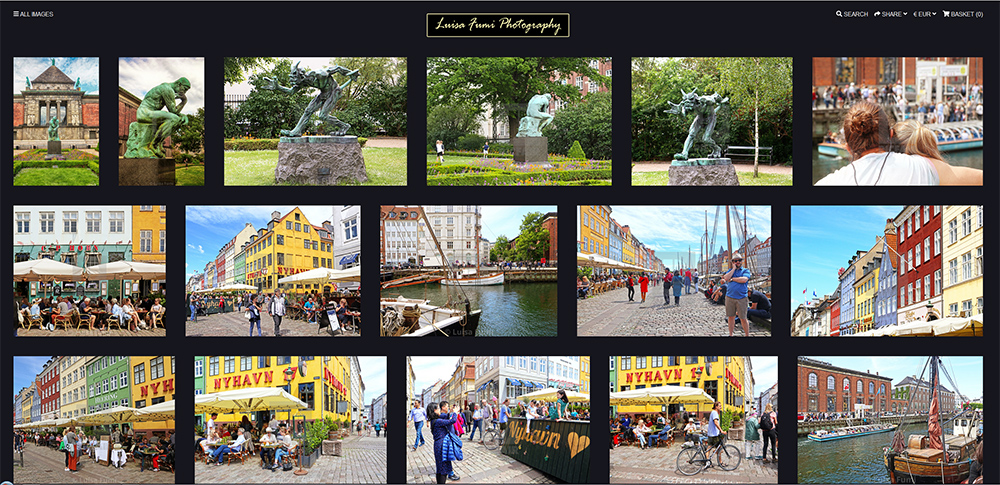
luisa-photogr2-1000 by .

Find you niche(s)!

I fear that Shutterstock has given the final blow to the microstock photos market with their unilateral action, by reducing drastically the contributors royalties to 10 cents/picture – promising more for big amounts of uploads and sales, but resetting the contributor at the beginning of each year – that is, forcing her/him to start from scratch @10 cents/sale, and thus humiliating legions of outraged submitters.
And I also fear that this deliberate act is actually a farsighted move: the SS people must have realized that the time was ripe to grab as much as possible before going out of business.
Just look around: the websites offering high res images for free are rapidly growing and some of their pictures are really beautiful, also considering that today’s smartphones are growing better endowed than most photographers.

What to do now?
I’m thinking of two possibilities:

1. Business is business: to upload all of one’s images on all agencies that sell (if just a little) in exchange for a decent (if just a little) royalty, and to hope for the best.
Alas, there is a heavy drawback about it, tough: a couple of years ago I withdrew almost all my images belonging to a particular well-selling niche from the less profitable agencies. As it happens, it proved to be a blatantly fortunate manoeuver: my sales at Alamy and Adobe more than doubled immediately. And they keep growing.
This way I understood that I was my own cheap competitor. When 123RF contacted me on behalf of a customer about a deleted image of mine, I told them that I was really sorry and explained candidly my problem. Quite surprisingly they accepted my point of view and respected it.

2. To accept the change without moaning and make plans. To leave and to upload your images on the trustworthiest agencies, but to keep aside the best ones and find other more profitable ways to sell them.

Still I think that the idea of a personal stock agency is worth a thought or three anyway – no matter if self-hosted or not: there are several alternatives on the market and at least two of them are very affordable (I’ll tell about them in a next post).
It could turn into a precious show-window for the images you like too much to give them away cheap.

At this point it wouldn’t surprised me to witness a revival of many curated niches over the mass cauldron.
Since many years I’m not only a contributor, but on behalf of my web customers also a microstock buyer, and as such I’m perfectly aware that my behaviour doesn’t deviate much from the vast majority of buyers, who statistically give up after the second page the local search engines produce.
And what with the tenths of millions of images stored by the agencies? Dead, almost completely dead.

Nowadays selling microstock is like winning a prize at a cheap lottery called “search engines”: partially random, partially influenced by hidden rules and only marginally based on the actual, hard-labored keywording.

What’s the point of such zillions of dead images, when just a few thousands of high-quality pictures, if well presented and properly selected, could make a really huge difference?

Stock images: is it time now for a drastic change?

Mishmash objects with statue by Luisa Fumi.

The state of the art

Just to feel the pulse and the vibe of the moment, I visit pretty often the wailing wall, a site well known to the photographers that sell images through the microstock agencies. Most of what I read there is mournful whining about the professional degradation and the brutal royalty cuts. Nothing constructive.

Due mostly to the steadily improving quality of cameras and smartphones, the images market is flooded by offers ranging from fair to excellent, a flood swelling like wildfire. The stock agencies, no fools, take full advantage of the situation by constantly shrinking the royalies – offer and demand, inevitably. A tough competition is going on too among the agencies themselves, and not surprisingly the smallest ones succumb.

What’s the use of 100 millions of images?

One microstock agency can count on tens of millions of images (at least). But how could a customer find his way through them all?
How will customers get to the “right” image they are looking for? According to statistics, most of the users while searching give up after the first page, and very few clench their teeth and hold out up to page three.
Rumors have it that the stock agencies, in order to offer a different image variety for the same search, sort them part random, part according to other criteria adjusted and twitched from time to time

I’ve been wondering long if it was worth wasting so much time and effort on the keywording ordeal, by far the most boring and time consuming task of image processing, if the agencies use just a small part of it. And above all: what’s the point for an agency to collect zillions of images when people give up searching after a few of them?
I’m smelling here another crisis looming in the air.

A possible way out?

Now it could be really the right time to reinvent the personal website where one can sell images without the support (?) of an agency.
I am not talking about a website meant to sell generic images the way small agencies do – and are now going through difficult times.
No, I’m thinking of a monographic website to offer many thousands of images focused on a theme of general interest or social relevance.
A well designed site, cleverly divided in sub-galleries, with an own shop. Something very user-friendly that a visitor looking for a picture of sport, touristic European regions, vegan lifestyle, sustainable energies, rock concerts, steampunk art, you name it… could easily navigate almost instinctively.
Perhaps also supported by a blog to make it more lively and interesting.

Think of your passions, of what you mostly love to shoot: in your (digital) drawer you’ll certainly find many thousands of images on the subject. 2000 to 4000 of them could be a good start for such a website.

Like this the awfully boring and demanding work of keywording them all would not go wasted: extracted as page tags, the keywords would be used by Google or duckduckgo to locate exactly your pictures. Take my word for it, I tried it on my own skin and it works 😀

Upon a second thought, why just one website? Along the same lines you could create several others centered on different themes – as many as your interests.
Cheer up: we don’t need million of visitors, nor to spend a fortune on online ads, while we can afford a better alternative and thus pocket the whole loot rather than just a minuscule slice of it.

stock by .

Stock images: è giunto il momento del sito personale?

Mishmash objects with statue by Luisa Fumi.

Riflessioni sul microstock

Stato dell’ arte

Frequento non proprio ogni giorno ma quasi il forum microstockgroup popolato dai fotografi che contribuiscono con le loro immagini alle più conosciute agenzie di microstock. Così, per sentire il polso della situazione. Per lo più ne escono alti lai sul deterioramento della professione e sulle percentuali delle royalties sempre in diminuzione.
E’ vero, per i contributors la crisi c’è ed è in un buco nero.
Complice la diffusione di macchine fotografiche e smartphones sempre più perfezionati, il mercato è inflazionato: l’ offerta è enorme, di qualità da sufficiente a eccelsa. Le agenzie ne approfittano, i compensi calano. La concorrenza fra le agenzie stesse sembra sempre più spietata e le più piccole soccombono.

A cosa servono 100 milioni di immagini?

Le agenzie ora possono contare su perlomeno diecine di milioni di immagini.
Ma siamo sicuri che la scelta del cliente funzioni al top?
Come si fa ad arrivare all’immagine “giusta” se le statistiche dicono che la maggior parte degli utenti in una ricerca non va oltre la prima pagina o al massimo guarda le prime tre?
Sembra che le agenzie per non fare uscire sempre le stesse immagini in una data ricerca le ruotino, in parte random, in parte seguendo criteri che vengono aggiustati di volta in volta.

Mi chiedo se valga la pena di sprecare tanto tempo nel keywording che è la parte più noiosa dell’image processing. Ma soprattutto: che senso ha per un’agenzia possedere tante immagini se poi è come se ne avesse solo qualche migliaio da far vedere ?
Mi domando se non siamo anche qui in un buco nero di crisi.

Una via d’uscita

Forse è giunto il momento di rispolverare con altri criteri il sito personale, dove il fotografo vende da solo le proprie immagini.
Non un sito generico però, altrimenti ci confonderemmo con le piccole agenzie che hanno già vita difficile.
Un sito monografico su un argomento di interesse piuttosto ampio, che possa contenere qualche migliaio di immagini, ben studiato, diviso magari in gallerie secondo sub-categorie, facile da sfogliare dagli appassionati del genere: da chi cerca ad esempio immagini di sport, di difesa personale o alpinismo, di una certa regione Europea alquanto turistica, uno stile di vita vegano, concerti rock, energie sostenibili e altri temi molto attuali oppure un po’ retro tipo steampunk.
Magari aggiungendoci vicino un blog, che male non fa.
Pensate un po’ alle vostre passioni, a cosa vi piace fotografare di più: nel vostro cassetto (digitale) sono sicura che avete immagini in quantità.
In questa maniera le tanto sudate keywords estratte e divenute tags delle vostre pagine non vengono sprecate ma verranno usate da Google (o ancora meglio da Duckduckgo) per far trovare nelle ricerche proprio le vostre foto.
Parola mia, provato sulla mia pelle e funziona! 😀

Le vostre 2000 – 4000 immagini abilmente presentate e SEO ottimizzate possono farsi valere tutte e piazzarsi bene da sole con i motori di ricerca.

E poi perchè limitarsi ad un unico sito monografico? Sulla falsariga del primo potete crearne altri.
Coraggio, che forse una via di uscita c’è.

Dopotutto non occorre attirare milioni di visitatori e spendere follie in pubblicità quando ci si può permettere di tenere tutto il ricavato.

stock by .

Digital art with watercolor filters (EN)

I have begun to play with Photoshop artistic filters for fun.
Adjusting the parameters, some results are remarkable: the starting point is always a shot of mine, but the overall feeling changes.

Not all the images are suitable for this kind of treatment, but some are really enhanced by the watercolor effect:


They are accepted by Shutterstock as illustrations and they are selling!