The Krampus Parade

It was quite cool to recreate with Midjourney a Krampus night 🙂

What is a Krampus?

It’s a big hairy creature, a blend of beast and human, with horns, a long pointed tongue, fangs, and a very convincing devilish look. The roots of the tradition date to an unspecified pre-christian era, from the European alpine regions.
Several centuries back the heathen Krampus folklore was engulfed into the Christmas tradition as a dark counterpart to St. Nicholas, to remind (mostly the children, but not only) of the possible effects of being naughty rather than nice.
Dozens of such ominous half-goat, half-demon creatures roam the streets during the Christmas season (5th-6th December) rattling chains and bells to warn or punish those who haven’t behaved properly (actually all the bystanders, not a bad assumption 😉 ).
The Krampus parade annual event is really a spine-chilling and oddly fascinating show: it takes more than a while to realize that inside those sinister figures there are playful men that every now and then stop and take off their demonic horned heads to drink a beer or play with absolutely delighted children.

The dark and the wild

Have a look at my AI & I collection and enjoy the gothic artistic side of the Krampus depicted by flogging MidJourney long enough.
13 beautifully suggestive images – occasionally with a hint of humor,

The practical and the funny

If you want to have a look at the real side of the ‘Krampusses’ – to balance the macabre with the fun – just look at my editorial images of the “backstage” of the annual Krampus Run in Munich These are 100% real, live, no AI involved.

The participants take their Krampus get-ups very seriously and spend a lot of money throughout the year to bring the evilness of their creation to perfection: elaborated barbaric fur outfits, heavy artistically carved wooden masks, monstrous horns, long lolling tongues – and more, much more. It’s a great experience to watch those big friendly guys happy even if exhausted by the fatigue of wearing those incredibly heavy costumes, graciously posing for a selfie and accepting kindly the curiosity of the viewers.

As in so many other occurrences, here too the AI complements admirably a professionally used camera, the one siding with fiction, the other with reality. The conflict is so often in the eye of the beholder…

Senior Gym

Visual Journey, embracing Flexibility and Strength in the Golden Years
A new collection at Gameover’s Atelier exploring per images the benefits of physical activity for seniors:
Improved Flexibility
Enhanced Strength & Muscle Tone
Better Posture & Balance
Increased Bone Density
Boost in Cognitive Functions
Portraits created using advanced artificial intelligence algorithms privately generated, intensively post-processed by (human 😉 ) hand and upscaled without losing resolution.

Midjourney V5 is here!

The new alpha Version of Midjourney V5 has been released.
No more distorted faces, no stray eyes, and even the finger count seems to be OK – about time!
How can you tell that this (above) isn’t a real photo? Well, there’s no “Vespa” logo on the young lady’s scooter… 🙂
Such an astonishing perfection is almost disturbing and might pose some ethical problems – working on a blog article about them.


Occasionally though the perfection is, ahem… perfectible: here the photographic effect is also impressive, but the detective doesn’t seem to be much at ease with that gun. Maybe he’s a rookie… 😀
However his hat is very fiftyish and the car in the background is terribly realistic too.

De profundis

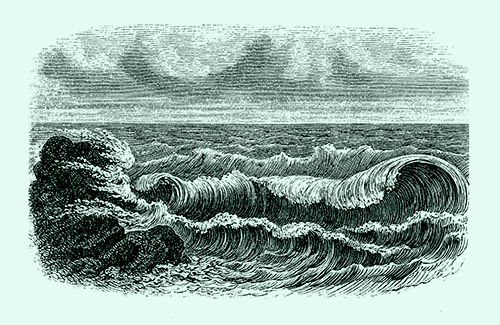
Paddle steamer in the storm by copyright luisa fumi.

It takes so little to kill the last glimmer of hope… I complained to Alamy about their mass-few-¢-sale of this month, and in reply I got this :

Hi Luisa,
Thanks for your email. I can see that these sales are through our distribution scheme. Which you are opted in for.
Our Distribution scheme is optional and under the section of your account titled “Additional Revenue Option”. As the title suggests it’s an opportunity to earn additional revenue through territories that Alamy doesn’t quite reach with direct sales. Every year our Distribution scheme returns a sizable 15% of our total revenue and so we’d recommend being part of it.
You can only opt out or remove countries in April of every year; this is so we can give our distributors a consistent collection.

Kind regards,
Chantelle

(note: I opted out from their ‘Novel use’ option last April 1st)

Let’s brush off the tiny coat of perfunctory politeness and have a closer look at the gist:

  • So I’m “opted in for”: did I opt in or was I opted in? I don’t remember having checked a box “feel free to sell my images for a few pennies and give me a minute fraction of that”.
  • If their Distribution scheme returns “a sizable 15% of their total revenue”, how many millions of images should they sell on the ‘miserable’ market to make 2¢ for the distributor, 2¢ for themselves and 1¢ for me, and still have a decent income?
    The 22 images of mine they undersold this way got them a total of $1.55 and a mightily irritated contributor about to abandon ship. Perhaps the time has come to move the rampant yuppie who had the Great Idea to the cleaning team.
  • So nice that I can opt out of such an economical disaster in April of every year, indeed. It would be even nicer though to know what exactly one has to opt out of in order to prevent one’s images from being given away like confetti.

“Fair play” has many opposites, and nowadays keeping the rules where nobody sees them has become a very popular one.

There is little doubt left, they definitely are shutterstocking. It’s damn sad to see an agency that used to have fair play as their flagship sink this low 🙁

How to sell digital goods

featured by .

Why did I migrate from Easy Digital Downloads to WooCommerce ?

I ‘m a webdesigner in love with digitalart. I’m still selling in a comfortable way my images (photos, illustrations, vintage stuff, 3D renderings) at micro-stock and stock agencies.
But my goal is to sell also by myself. As I can buildup websites, I launched AntikStock to sell a niche of mine: my illustrations restored and elaborated from the huge antique book collection of my property.

At a first glance Easy Digital Downloads (EDD) would really look the easy way to sell downloadable goods. But a rather disturbing (arithmetical!) issue (*) popping up changed my point of view and induced me to look seriously for alternatives and compare performances.

While comparing I found out that WooCommerce offers not only a quite solid E-commerce platform for virtual downloadable goods, but also much more interesting features free of charge.

A few examples: :

  • to duplicate a product to sell with WooCommerce is free, on EDD you have to pay 29usd/year only for this simple feature!
  • to comply with the EU VAT rules is free of charge, no way can EDD compete for free
  • cross-sells and upsells are included, no need to pay for the corresponding EDD options anymore.

I could go on further, I would just add that I completed seamlessy my migration owning an elegant new shop with many more features totally free of charge and – the cherry on top – with a beautiful free image zoom.

(*) As you may know, selling digitally downloadable goods in EU imposes a set of pretty complicated rules made by bureaucrats for bureaucrats, but we can cope with them. EDD behaves okay at checkout time unless you introduce a discount. If you do that a sum of round-up errors appears in the VAT calculation; as quite surprisingly the net amount in this case is not shown, the error goes easily unnoticed – until a diligent official remarks such a few cents mismatch and then things are likely to turn interesting. Of course I reported it, but EDD didn’t seem to take the matter seriously.

Good morning AntikStock!

champagne-600 by .

After a brief running in of vintage-nostalgia.com as my experiment was more positive than expected I decided it would be worth taking a step further, treasuring the previous experience. I made a few improvements:
– a more professional name
– a more reliable E-commerce platform
– bigger sample images (still watermarked)
– much more accurate tagging

Then I buried good old vintage-nostalgia in the garden and launched antikstock.com.

I’m pretty confident that, working on a profitable niche of the image-stock market, a professional website of my own shall be the best way to sell exclusive images decently. It is not time yet to say goodbye also to the best stock agencies, but if the trend stays worrisome the lifeboat is ready.

In this shipwreck I’ll have one advantage and one big flaw: I’m passionate about my work of restoring, elaborating, painting, making collages of antique illustrations from my huge ancient book library, which is growing almost uncontrollably.

On the other hand I’m aware that a good promotion on the social is important, and I have little time for that. We shall see…

One promising alternative to the self-hosted site: Picfair

luisa-photogr3-1000 by .

I always hear the same refrain: yes, they are fair indeed, pity though that they don’t sell much…
Actually so far my experience at Picfair had been… fair: for a few years I’ve been putting every now and then some images there, having three or four sales promptly paid in the meantime.

But times seem to be changing, and I decided that I need a personal photo website. I would know pretty well how to set up one myself, but for a small yearly fee Picfair offers me the possibility to have it under my own name, and as a very nice bonus also to sell my pictures as prints/posters/framed. So why not to give it a try?

So be it: luisafumi-photography.com
The presentation of the images is very good, and I can (beside having an URL of my own by them):
– sell prints,
– make albums and feature one on the first page,
– have a local search engine,
– create a splash page with a picture I love
– add external links to the menu (to my blog here, to my other website vintage-nostalgia.com, etc.)
– have a personal watermark. I retained the Pifair standard one, very well thought and designed, also because I am happy to be there in excellent company, as I find the overall Picfair image quality astonishingly high.

Time will tell if such a decision will be fruitful – now it is to early to make a reliable forecast about the destiny of the photo market at all.

Just few days after my new Picfair installation I was rewarded with a pleasant surprise: my first print sale, my splash image! A good omen and a nice startup.

SPLASH-PICFAIR-600 by luisa fumi.

A pebble in the pond: a free Artists’ Marketplace

stock3 by .

For nearly a month (since the infamous 1st of June) a couple of disquieting questions have been bouncing back and forth within my skull:
what are we to do if/when the other agencies follow Shutterstock’s despicable example and start treating their contributors like beggars?
How come a fair agency like Picfair appears to sell nearly nothing even though they offer such awfully great pictures?

I do know all too well what it’s like to set up a photostock agency – I did it. Once you solve the technical problems (quite a hard cliff themselves) and get it to run fine, you find out to your dismay that keeping it up and running – server fees, updating, de-hacking, automation, you name it – is way more expensive (at least in time) than you optimistically thought when you started.

No, I don’t really think that setting up a new agency – with so many small ones out there struggling to survive – would be a solution. What we need is a new concept, something that would entice anyone who needs one or more images having specific requirements. The cue came from Alex Rotenberg as he told us how a customer, unable to find his images on Shutterstock any longer, got directly in touch with him.

So why not to put in contact clients and contributors, thus bypassing the agencies?
All it would take would be a surprisingly cheap and simple no-profit site, a sort of artists’ cooperative dedicated to illustrations, photos and video clips, where potential clients may freely ask for images having some specific features. Their requests appear on a board and get immediately sent per E-mail to all photographers who subscribed (for free).
A mother knows her baby, a photographer knows his/her images: the one who has an image that may satisfy the client (say, a kid playing in a puddle) replies uploading ASAP one or more watermarked images onto a page that only the client may access.

That would be really big news: a thoughtful human response, no AI at all, no 300 pictures of the same lonely puddle in the park taken from 300 different angles. And no time wasted on keywords ( do we all loathe them!)

As far as prices are concerned, that’s all to be seen: fixed price, normal and premium, private negotiation… a matter of taste. However the cooperative rules must be simple and clear, and accepted by all subscribers; that’s important, the one who doesn’t play fair gets kicked out without ceremony.
The site would be extremely simple – though attractive – and wouldn’t require any special server performances, or large amounts of memory, or special skills to run it. The only costs would be:

  • annual server rent (not much).
  • software maintenance (not much if regularly performed, but it must be done weekly to keep the software up to date and to prevent possible undue intrusions, malware and hacking).
  • start-up software development and further expansions if the initiative is successful (affordable).

No commission on sales – we’re talking of a no-profit initiative and this way it shall stay, lest greed creeps in and shatters(tocks) it to crumbles 🙂

The expenditures above would be covered by all subscribers after their first sale; if some 1000 – 1500 artists gather and join, it would be a matter of a few $ each yearly – transparent management, all expenditures publicly documented, no hidden costs.

Of course there should be a page telling the cooperative’s history and its goals, with a nice name (how about “Shutterstock’s castaways”?) and some well-groomed galleries of monographic pictures about current topics, something like the Photocase’s ones.

Maximum publicity to all successful sales on the site.
No a-priori exclusive, though it may be individually agreed with the client case by case.

All the above should obviously be discussed in detail once (if) this initiative takes shape and color. Mine is just a stone I’m throwing in the pond, let’s see now if it makes any waves…

Stock images: is it time now for a drastic change?

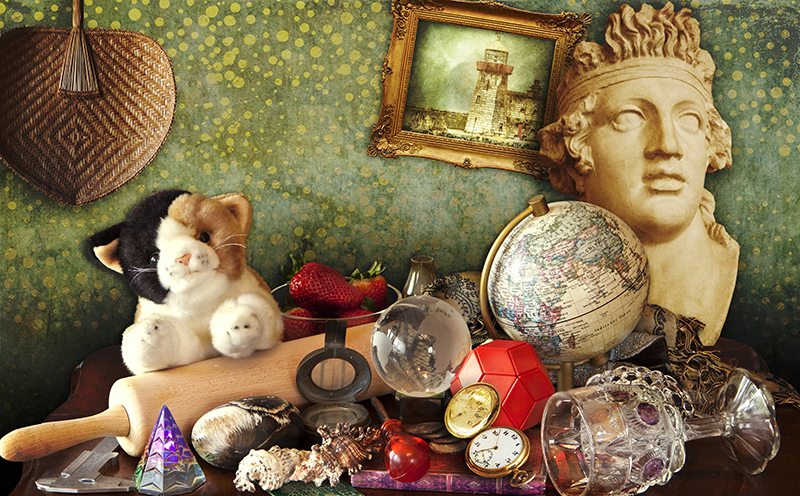
Mishmash objects with statue by Luisa Fumi.

The state of the art

Just to feel the pulse and the vibe of the moment, I visit pretty often the wailing wall, a site well known to the photographers that sell images through the microstock agencies. Most of what I read there is mournful whining about the professional degradation and the brutal royalty cuts. Nothing constructive.

Due mostly to the steadily improving quality of cameras and smartphones, the images market is flooded by offers ranging from fair to excellent, a flood swelling like wildfire. The stock agencies, no fools, take full advantage of the situation by constantly shrinking the royalies – offer and demand, inevitably. A tough competition is going on too among the agencies themselves, and not surprisingly the smallest ones succumb.

What’s the use of 100 millions of images?

One microstock agency can count on tens of millions of images (at least). But how could a customer find his way through them all?
How will customers get to the “right” image they are looking for? According to statistics, most of the users while searching give up after the first page, and very few clench their teeth and hold out up to page three.
Rumors have it that the stock agencies, in order to offer a different image variety for the same search, sort them part random, part according to other criteria adjusted and twitched from time to time

I’ve been wondering long if it was worth wasting so much time and effort on the keywording ordeal, by far the most boring and time consuming task of image processing, if the agencies use just a small part of it. And above all: what’s the point for an agency to collect zillions of images when people give up searching after a few of them?
I’m smelling here another crisis looming in the air.

A possible way out?

Now it could be really the right time to reinvent the personal website where one can sell images without the support (?) of an agency.
I am not talking about a website meant to sell generic images the way small agencies do – and are now going through difficult times.
No, I’m thinking of a monographic website to offer many thousands of images focused on a theme of general interest or social relevance.
A well designed site, cleverly divided in sub-galleries, with an own shop. Something very user-friendly that a visitor looking for a picture of sport, touristic European regions, vegan lifestyle, sustainable energies, rock concerts, steampunk art, you name it… could easily navigate almost instinctively.
Perhaps also supported by a blog to make it more lively and interesting.

Think of your passions, of what you mostly love to shoot: in your (digital) drawer you’ll certainly find many thousands of images on the subject. 2000 to 4000 of them could be a good start for such a website.

Like this the awfully boring and demanding work of keywording them all would not go wasted: extracted as page tags, the keywords would be used by Google or duckduckgo to locate exactly your pictures. Take my word for it, I tried it on my own skin and it works 😀

Upon a second thought, why just one website? Along the same lines you could create several others centered on different themes – as many as your interests.
Cheer up: we don’t need million of visitors, nor to spend a fortune on online ads, while we can afford a better alternative and thus pocket the whole loot rather than just a minuscule slice of it.

stock by .

Feel like buying a lake? (EN)

Yes, nothing wrong with your eyes: a LAKE! And a damn beautiful one too, with a wonderful view on the Bavarian Alps, a complete immersion into unpolluted nature, clear waters, plenty of fishes, and as a topping an antique though entirely restored inn right on the bank, enjoyed for holiday and relax (among so many others) also by Sigmund Freud.
All included in the package (well, except for the Alps…)

Thumsee lake

Such an opportunity doesn’t really occur every century, nor does it having to design a website for it.
Et voilĂ : the Thumsee lake in Germany, near the Austrian border and 20 minutes away from Salzburg (does the name “Mozart” ring a bell?).

Thumsee Wewbsite
Fotos by Kurverwaltung Bad Reichenhall